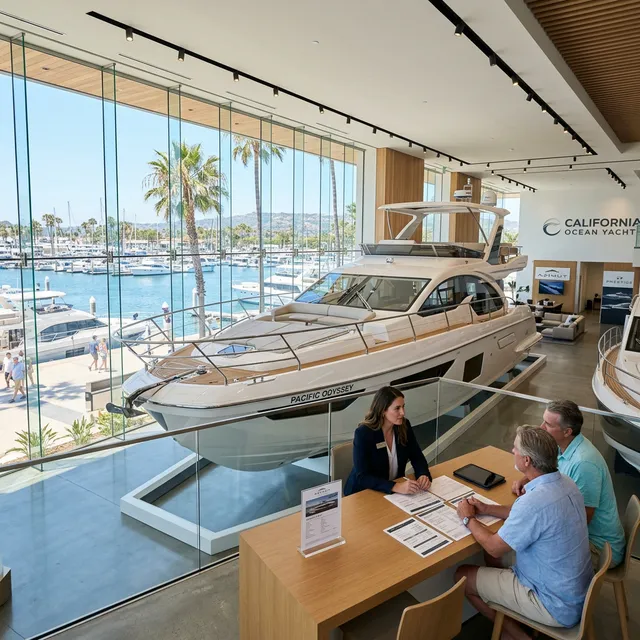
How California Taxes Boat Purchases
California imposes sales or use tax on virtually every boat purchase, making it one of the most expensive states in the country for buying a vessel. The statewide base rate is 7.25%, composed of a 6.0% state tax and a mandatory 1.25% local tax. On top of this base, most cities and counties add district taxes that push the combined rate significantly higher.
Unlike states such as Florida (which caps vessel sales tax at $18,000) or South Carolina (capped at $500), California has no cap on boat sales or use tax. This means a $100,000 boat purchased in a jurisdiction with a 9% combined rate will incur $9,000 in tax — and there is no ceiling, no matter how expensive the vessel. For high-value yacht purchases, this cost difference between California and cap states can amount to tens of thousands of dollars.
The tax is administered by the California Department of Tax and Fee Administration (CDTFA), not the DMV, although the DMV collects use tax during the vessel registration process. Understanding how these taxes work — and the limited exemptions available — can help California boat buyers plan their purchases more effectively.
California Sales Tax Rates by Region
California's combined sales tax rate varies by location because cities and counties levy their own district taxes on top of the 7.25% statewide base. Here are representative rates for major boating regions as of 2026:
| Region / City | Combined Rate | Notes |
|---|---|---|
| Statewide Minimum | 7.25% | Base rate (6.0% state + 1.25% mandatory local) |
| San Diego | 7.75% | Major marina and boating hub |
| Orange County (unincorporated) | 7.75% | Newport Beach, Dana Point marinas |
| San Francisco | 8.625% | Bay Area boating |
| Los Angeles (City) | 9.50% | Marina del Rey, Long Beach area |
| Oakland | 10.25% | East Bay marinas |
| Richmond | 10.25% | San Pablo Bay area |
| Highest jurisdictions | 10.75%+ | Some cities in LA County and Alameda County |
The tax rate that applies to your boat purchase is generally based on where the vessel will be registered and primarily used, not where you physically complete the purchase. If you buy a boat in a low-rate county but register it in a high-rate county, you will owe the higher rate. You can look up the exact rate for any address using the CDTFA online rate lookup tool.
Use Tax: The 12-Month Rule for Out-of-State Purchases
Many boat buyers explore purchasing vessels in other states — particularly zero-tax states like Oregon, Montana, Delaware, or New Hampshire — to avoid California's steep sales tax. However, California has robust use tax enforcement rules specifically designed to address this strategy.
The 12-Month Presumption: If you purchase a vessel outside of California and bring it into the state within 12 months of the purchase date, the CDTFA presumes the boat was purchased for use in California. Use tax at your local California rate will be assessed on the full purchase price. This presumption applies if any of the following conditions are met: you are a California resident, the vessel is subject to property tax in California during the first 12 months, or the vessel is used or stored in California more than half the time during the first 12 months.
Overcoming the Presumption: You can overcome the 12-month presumption by providing the CDTFA with documented evidence that the vessel was genuinely purchased for use outside California. Acceptable evidence includes out-of-state registration, marina receipts, fuel purchases, and maintenance records showing the vessel was based and used outside California for the majority of its first 12 months.
The 12-Month Safe Harbor: If you purchase a vessel outside California, first use it outside California, and do not bring it into the state until more than 12 months after the purchase date, you are generally not subject to California use tax. The CDTFA considers this sufficient evidence that the vessel was not originally purchased for California use.
Tax Credit for Taxes Paid to Other States
If you paid sales or use tax to another state when purchasing your vessel, California will generally credit that amount against the California use tax owed. For example, if you paid 4% sales tax in another state and your California rate is 9%, you would owe only the 5% difference as California use tax.
To claim this credit, you must provide proof of the tax payment to the other state — typically a receipt from the dealer or a copy of your registration showing tax paid. The credit applies only to legally imposed state/local sales or use taxes, not to registration fees, title fees, or other non-tax charges.
Exemptions from California Boat Sales Tax
While California's boat sales tax is broad, several exemptions exist for specific situations:
Family Member Transfers: Vessels transferred between qualifying family members (spouse, registered domestic partner, parent, grandparent, child, grandchild) are exempt from use tax. You must provide documentation of the relationship and may need a CDTFA use tax clearance certificate (CDTFA-111). For details on the transfer process, see our California boat title transfer guide.
Repairs, Retrofits, and Modifications (RRM): A vessel brought into California within 12 months of purchase exclusively for repairs, retrofits, or modifications performed by a licensed repair facility may qualify for an exemption. The vessel must not be used for any other purpose in California during the repair period.
Immediate Removal Exclusion: If a vessel's only use in California is to remove it from the state, and it will be used solely outside California thereafter, you may not owe use tax. This applies to scenarios like purchasing a boat from a California seller and immediately transporting it to your home state.
Commercial Vessel Exemption: Vessels used exclusively in commercial deep-sea fishing or in interstate or foreign commerce may qualify for a sales tax exemption under specific CDTFA guidelines. This does not apply to recreational charter operations.
How to Calculate Your Total Tax
To estimate the total tax on a California boat purchase, follow this formula:
Total Tax = Purchase Price × Combined Local Tax Rate
Here is an example calculation for a $50,000 boat registered in different California locations:
| Registration Location | Combined Rate | Tax Amount |
|---|---|---|
| Rural county (minimum rate) | 7.25% | $3,625 |
| San Diego | 7.75% | $3,875 |
| San Francisco | 8.625% | $4,312 |
| Los Angeles | 9.50% | $4,750 |
| Oakland | 10.25% | $5,125 |
The difference between registering a $50,000 boat in a 7.25% jurisdiction versus a 10.25% jurisdiction amounts to $1,500. For a $200,000 vessel, that same rate difference equals $6,000. Use our boat registration fee calculator for an interactive estimate of your total costs including registration fees and tax.
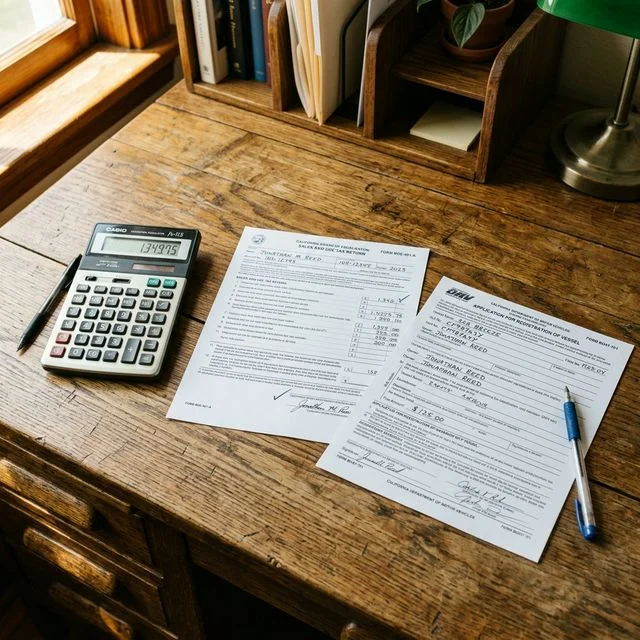
California vs. Other States: Tax Comparison
To put California's boat sales tax in perspective, here is how it compares to other popular boating states on a $100,000 vessel purchase:
| State | Tax Rate / Cap | Tax on $100K Boat |
|---|---|---|
| California (Los Angeles) | 9.50%, no cap | $9,500 |
| California (minimum) | 7.25%, no cap | $7,250 |
| Florida | 6%, capped at $18,000 | $6,000 |
| Texas | 6.25% + local (max 8.25%) | $6,250 – $8,250 |
| New York | 4% state + local (up to 8.875%) | $4,000 – $8,875 |
| South Carolina | 5%, capped at $500 | $500 |
| North Carolina | 3%, capped at $1,500 | $1,500 |
| Oregon | No sales tax | $0 |
On a $500,000 yacht, the contrast is even more stark. A California buyer in Los Angeles would pay $47,500 in tax, while a South Carolina buyer would pay just $500 — a difference of $47,000. These disparities explain why many high-value vessel purchases occur in tax-advantaged states, though California's use tax rules described above are specifically designed to recapture revenue from residents who attempt this strategy.
For a complete 50-state comparison of boat tax rates and caps, see our boat sales tax by state guide and cost comparison tool.
County Personal Property Tax on Boats
In addition to the one-time sales or use tax, California counties may assess an annual personal property tax on boats. Under California law, boats are classified as personal property and may be subject to property tax assessment by the county assessor where the vessel is located on January 1 of each year.
The property tax rate is typically around 1% of the assessed value (similar to real property tax rates under Proposition 13, though boats as personal property are reassessed annually rather than being subject to the acquisition value basis used for real estate). Not all counties actively assess personal property tax on recreational boats — enforcement varies. Contact your county assessor's office to determine whether this applies to your vessel.
The Montana LLC Strategy: Risks for California Residents
Some boat buyers form a Montana LLC to purchase and register vessels in Montana (which has no sales tax) to avoid California's steep tax. While forming a Montana LLC is legal, using it primarily to avoid your home state's sales tax while the boat is kept and used in California is a significant legal and financial risk.
The CDTFA actively investigates vessels bearing out-of-state registrations that appear to be primarily operated in California. Investigators may check marina records, fuel purchases, and dock leasing agreements to establish that a vessel is based in the state. If the CDTFA determines that a Montana-registered vessel is primarily used in California, the owner can face the full use tax amount plus penalties (up to 25% of the tax owed) and interest dating back to the original purchase. On a $500,000 vessel, this could mean over $60,000 in taxes, penalties, and interest.
Before pursuing any alternative registration strategy, consult a California tax attorney or CPA who specializes in maritime taxation.
Tips for Legally Reducing Your California Boat Tax
While you cannot legally avoid California sales tax on a boat used primarily in the state, there are legitimate strategies to reduce your overall tax burden:
Register in a lower-rate jurisdiction: If you have legitimate ties to a lower-rate county (such as a second home or marina berth), registering the vessel there can save 1%–3% compared to high-rate urban areas like Los Angeles or Oakland.
Negotiate the purchase price: A lower documented purchase price means lower tax. On a $50,000 boat, negotiating the price down by $5,000 saves $375–$538 in tax depending on your county.
Take advantage of trade-in credits: If you are upgrading from an existing vessel, some dealers apply the trade-in value as a credit against the purchase price, reducing the taxable amount.
Explore commercial exemptions: If you plan to use the vessel for qualifying commercial purposes (commercial fishing, interstate commerce), you may be eligible for a full or partial exemption. Documentation requirements are strict, so work with a tax professional.
Time family transfers correctly: If you plan to eventually transfer the vessel to a family member, completing the transfer directly (rather than through an intermediary sale) preserves the family exemption from use tax.
Frequently Asked Questions
What is the sales tax on a boat in California?
Does California have a sales tax cap on boats like Florida?
Do I owe California use tax if I buy a boat in Oregon?
Is there a tax exemption for boats transferred between family members?
How do I find the exact sales tax rate for my California location?
Do California counties charge annual property tax on boats?
Sources
- California CDTFA — Sales and Use Tax Rates (https://www.cdtfa.ca.gov/taxes-and-fees/rates.aspx)
- California CDTFA — Tax Information for Vessels (https://www.cdtfa.ca.gov/taxes-and-fees/use-tax-vessel.htm)
- California DMV — Vessel Registration Fees (https://www.dmv.ca.gov/portal/vehicle-registration/vessel-registration/)
- Tax Foundation — State Sales Tax Rates (https://taxfoundation.org/)
This information is provided for reference purposes only. While we strive to keep data accurate and up-to-date, registration requirements, fees, and regulations may change without notice. Always contact your state's official registration agency for the most current and authoritative information before making any decisions.