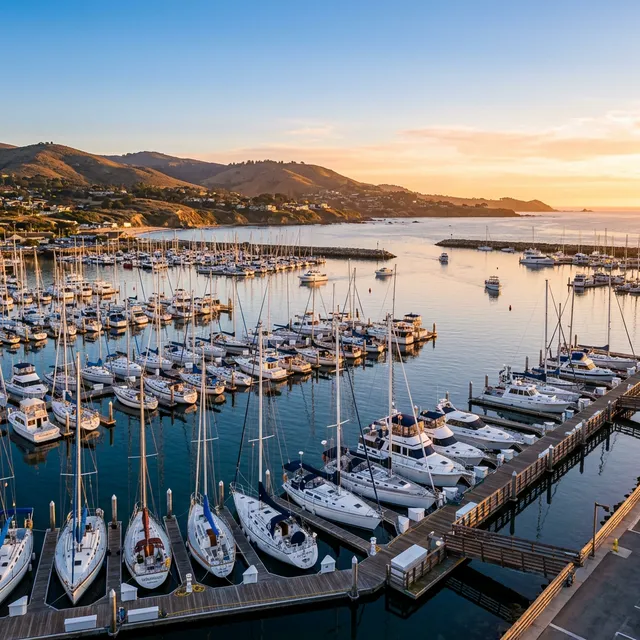
Why California Does Not Issue Boat Titles
California is one of a handful of states in the United States that does not issue titles for boats and other vessels. Unlike states such as Florida, Texas, or Michigan where boat owners receive a Certificate of Title as proof of ownership, California relies entirely on the vessel registration system administered by the California Department of Motor Vehicles (DMV).
In California, your proof of ownership is a combination of two documents: the Certificate of Number (your CF registration) and a Bill of Sale. The CF number — formatted as CF 1234 AB — serves as both your registration identifier and the primary record linking you to your vessel. This approach is fundamentally different from title-based states, and understanding how it works is essential for anyone buying or selling a boat in California.
This guide walks you through the complete process of transferring boat ownership in California, including every form you need, the fees involved, and common pitfalls to avoid. Whether you are buying from a dealer, purchasing from a private seller, or receiving a vessel as a gift from a family member, the steps below will help you complete the transfer correctly and on time.
Required Forms for California Vessel Transfer
California uses several DMV forms to process vessel ownership transfers. Having the correct paperwork prepared before visiting the DMV or mailing your application will save you significant time. Here is a breakdown of each form and its purpose:
REG 262 — Vehicle/Vessel Transfer and Reassignment Form: This is the primary transfer document. Both the buyer and seller must complete and sign this form. It serves as an official bill of sale and power of attorney for the transaction. The seller signs to release ownership, and the buyer signs to accept it. The REG 262 also documents the purchase price, which determines the use tax owed.
REG 138 — Notice of Transfer and Release of Liability: The seller must complete and submit this form to the DMV within 5 days of the sale. This form is critical because it releases the seller from legal liability for the vessel after the transfer date. Failure to file this form means the seller could be held responsible for accidents, environmental violations, or other issues involving the vessel after it has been sold.
BOAT 101 — Application for Vessel Certificate of Number: The buyer uses this form to register the vessel under their name and receive a new or transferred CF number. This is essentially the registration application for the new owner.
REG 227 — Application for Replacement or Transfer of Title: Despite the name, this form is used in California for vessels when the original registration card or certificate of ownership is lost, damaged, or was never received. If the seller cannot provide the original registration documents, a REG 227 must be filed to obtain a duplicate before the transfer can proceed.
REG 256 — Statement of Facts: This supplemental form is required in specific situations, such as claiming a use tax exemption for family transfers, explaining discrepancies in documentation, or providing additional context when a standard document is unavailable.
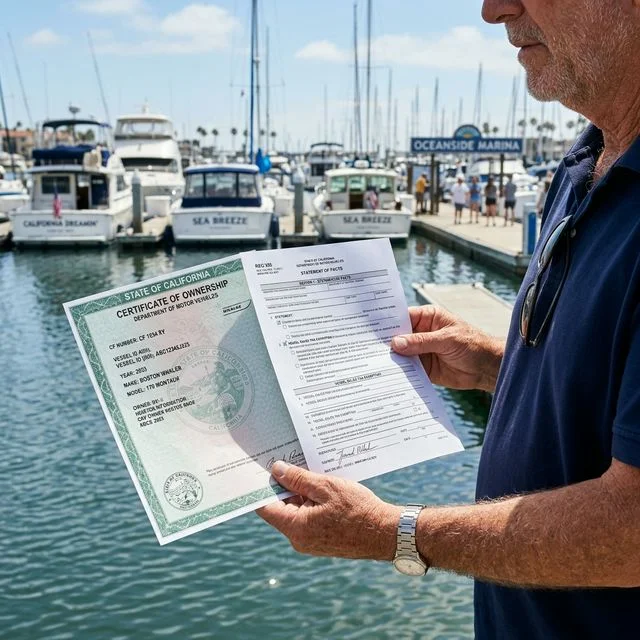
Step-by-Step: How to Transfer a Boat in California
Follow these steps to complete a vessel ownership transfer in California. The entire process should be completed within 30 days of the purchase date to avoid late fees and penalties.
Step 1: Seller Prepares Documentation
Before the transaction, the seller should gather the following: the current Certificate of Number (registration card) for the vessel, a completed REG 262 form with their signature in the seller section, and a written Bill of Sale that includes the date of sale, names and addresses of both parties, the vessel description (make, model, year, Hull Identification Number, and CF number), and the agreed purchase price.
If the seller has lost the registration card, they must first apply for a duplicate using form REG 227 before they can transfer ownership.
Step 2: Complete the Sale and Sign REG 262
At the time of sale, both parties should complete and sign the REG 262 form. The seller fills out the seller section (including odometer disclosure if applicable — though this is typically not required for vessels) and the buyer fills out the buyer section. Both signatures must be present for the transfer to be valid.
The purchase price listed on the REG 262 will be used by the DMV to calculate the use tax owed by the buyer. Be accurate — the DMV may challenge a declared value that appears significantly below fair market value.
Step 3: Seller Files REG 138 Within 5 Days
Within 5 days of the sale, the seller must submit form REG 138 (Notice of Transfer and Release of Liability) to the DMV. This can be done online through the California DMV website, by mail, or in person at a DMV office. Filing this form is the seller's most important post-sale obligation — it officially notifies the DMV that they are no longer the owner and should not be held liable for the vessel going forward.
Step 4: Buyer Submits Registration Application
The buyer must submit the following documents to the DMV within 30 days of the purchase date: the completed BOAT 101 application, the signed REG 262 form, the seller's Certificate of Number (or REG 227 duplicate), a valid photo ID, and payment for the transfer fee, registration fees, and use tax.
Documents can be submitted in person at any DMV office or by mail to: Department of Motor Vehicles, PO Box 942869, Sacramento, CA 94269-0001. Processing times for mailed applications are typically 4 to 6 weeks.
Step 5: Receive Your New Registration
After the DMV processes your application, you will receive a new Certificate of Number (registration card) and vessel year tags (stickers). The CF number assigned to the vessel is permanent — it stays with the boat through ownership changes. You must display the CF number and current registration stickers on both sides of the bow in block letters at least 3 inches high, with colors that contrast against the hull.
Fees for California Boat Ownership Transfer
The total cost of transferring boat ownership in California includes several components. Here is a summary of the fees you should expect to pay as of 2026:
| Fee Type | Amount | Notes |
|---|---|---|
| Transfer Fee | $15.00 | Paid by the buyer at time of application |
| Original Registration | $29.00 – $49.00 | $29 in even-numbered years, $49 in odd-numbered years |
| Quagga/Zebra Mussel Fee | $16.00 | Applies to vessels used in freshwater |
| Use Tax | 7.25% – 10.75% | Based on purchase price; rate depends on county |
| Late Penalty | Varies | Applied if registration is filed after 30 days |
The use tax is typically the largest expense. On a $30,000 boat in a county with an 8.5% combined tax rate, the use tax alone would be $2,550. Unlike states such as Florida ($18,000 cap) or South Carolina ($500 cap), California has no cap on vessel sales/use tax, which makes it one of the most expensive states for boat purchases from a tax perspective. For a detailed breakdown, see our guide on California boat sales tax.
Family Transfers and Tax Exemptions
California provides a significant use tax exemption for vessel transfers between qualifying family members. If you receive a boat as a gift or purchase it from a qualifying relative who is not a licensed vessel dealer, you are generally exempt from paying use tax on the transaction.
Qualifying family relationships include: parent, grandparent, child, grandchild, spouse, and registered domestic partner. Sibling transfers qualify only if both siblings are minors and related by blood or adoption. Stepparents, stepchildren (unless legally adopted), and ex-spouses after a divorce decree do not qualify for this exemption.
To claim the family transfer exemption, you must submit supporting documentation to the California Department of Tax and Fee Administration (CDTFA), such as a birth certificate, marriage license, or adoption certificate. You may also need to complete a REG 256 (Statement of Facts) explaining the nature of the transfer. The DMV may process the exemption directly, or you may be asked to obtain a use tax clearance certificate (CDTFA-111) from the CDTFA.
Buying a Boat from a Dealer vs. Private Seller
The transfer process differs slightly depending on whether you purchase from a licensed dealer or a private seller:
Dealer Purchase: Licensed boat dealers in California handle most of the paperwork on your behalf. The dealer collects the sales tax at the point of sale, completes the transfer forms, and submits them to the DMV. You typically receive your registration documents within a few weeks. The dealer may also provide a temporary operating permit so you can use the vessel while the permanent registration is processed.
Private Sale: When buying from a private individual, the responsibility for completing and submitting transfer forms falls on the buyer and seller directly. The buyer pays use tax (equivalent to sales tax) to the DMV at the time of registration rather than to the seller. This is the scenario where mistakes are most common — incomplete forms, missing signatures, and unreported transfers can all delay the process. Double-check every document before visiting the DMV.
Common Mistakes to Avoid
Based on common issues reported by California boat owners, here are the most frequent mistakes during the transfer process and how to avoid them:
Missing the 30-day deadline: California requires the buyer to apply for transfer within 30 days of the purchase date. After 30 days, late penalties are assessed. Mark your calendar and submit paperwork promptly.
Seller forgets to file REG 138: If the seller does not file the Notice of Transfer and Release of Liability, they remain legally associated with the vessel. Sellers should file REG 138 online immediately after the sale — it takes less than 5 minutes.
Underreporting the purchase price: The DMV may compare your declared purchase price to the vessel's fair market value. If the declared price is significantly below market value, the DMV may assess use tax based on the fair market value instead. Always report the actual transaction amount.
Not verifying the Hull Identification Number (HIN): Before finalizing any purchase, physically verify the HIN on the vessel matches the number on the registration documents. Discrepancies can indicate a stolen vessel or clerical error that will need to be resolved before transfer.
Assuming a Bill of Sale alone is sufficient: In California, a Bill of Sale is an important supporting document, but it does not by itself transfer ownership. The formal DMV registration process (REG 262 + BOAT 101) is required to officially change ownership.
How California Compares to Other States
California's no-title system is unusual but not unique. Several other states also do not issue vessel titles, including Alaska, Arizona, Colorado, Delaware, Idaho, New Hampshire, and others. However, California's system is among the most structured of the no-title states, with detailed DMV forms and a well-established registration database.
For boat owners who move to California from a title state, the transition can be confusing. Your out-of-state title is used as proof of ownership during the initial California registration process, but California will not issue you a California title in return. Instead, you receive a California Certificate of Number, and your ownership record is maintained in the DMV database. If you later move to a title state, you will need to use your California registration and Bill of Sale to apply for a title in the new state.
For details on registration in neighboring states, see our guides for Oregon, Nevada, and Arizona boat registration.
Frequently Asked Questions
Does California issue boat titles?
How much does it cost to transfer a boat in California?
What forms do I need to transfer a boat in California?
How long do I have to transfer a boat after purchase in California?
Is a boat transfer between family members tax-free in California?
Can I buy a boat without a title in California?
Sources
- California DMV — Vessel Registration (https://www.dmv.ca.gov/portal/vehicle-registration/vessel-registration/)
- California DMV — REG 262 Vehicle/Vessel Transfer Form (https://www.dmv.ca.gov/portal/handbook/vehicle-industry-registration-procedures-manual/transfers/)
- California DMV — REG 138 Notice of Transfer (https://www.dmv.ca.gov/portal/vehicle-registration/titles/notice-of-transfer-and-release-of-liability-nrl/)
- California CDTFA — Use Tax on Vessels (https://www.cdtfa.ca.gov/taxes-and-fees/use-tax-vessel.htm)
This information is provided for reference purposes only. While we strive to keep data accurate and up-to-date, registration requirements, fees, and regulations may change without notice. Always contact your state's official registration agency for the most current and authoritative information before making any decisions.