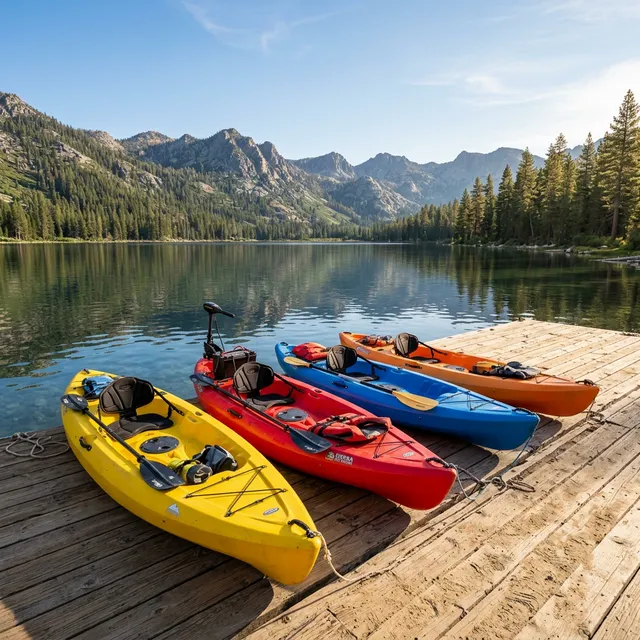
Do You Need to Register a Kayak in California?
The short answer: it depends on whether your kayak has a motor. California's registration rules are straightforward once you understand the key distinction between motorized and non-motorized vessels.
Non-motorized kayaks, canoes, paddleboards, and rowboats that are propelled solely by human power (paddles, oars) are exempt from California vessel registration. You do not need a CF number, registration stickers, or any DMV paperwork to paddle a kayak on California waterways. This exemption applies regardless of the kayak's size.
However, the moment you attach any type of motor — including a small electric trolling motor, a gas outboard, or even a battery-powered thruster — your kayak is reclassified as a motorized vessel and must be registered with the California DMV. There is no minimum horsepower threshold; any motor of any size triggers the registration requirement.
Registration Requirements for Motorized Kayaks
If you add a motor to your kayak, here is what you need to do:
Step 1: Complete BOAT 101 — Submit an Application for Vessel Certificate of Number to the California DMV. You will need proof of ownership (receipt, Bill of Sale) and a valid photo ID.
Step 2: Pay registration fees — The fee schedule for motorized kayaks is the same as for any registered vessel in California:
| Fee | Amount | Frequency |
|---|---|---|
| Original Registration (Even Year) | $29.00 | One-time |
| Original Registration (Odd Year) | $49.00 | One-time |
| Renewal | $20.00 | Every 2 years |
| Quagga/Zebra Mussel Fee | $16.00 | Per registration period |
Step 3: Display your CF number — Once registered, you must display the CF number on both sides of the bow in block letters at least 3 inches high. For kayaks, this can be challenging due to limited space — many kayak owners use waterproof vinyl decals for a clean application. Current registration stickers must also be displayed.
Step 4: Obtain a Boater Card — As of January 1, 2025, all operators of motorized vessels in California must carry a California Boater Card. This includes motorized kayaks. Complete a NASBLA-approved boating safety course to receive your card. Courses are available online and typically cost $20–$50.
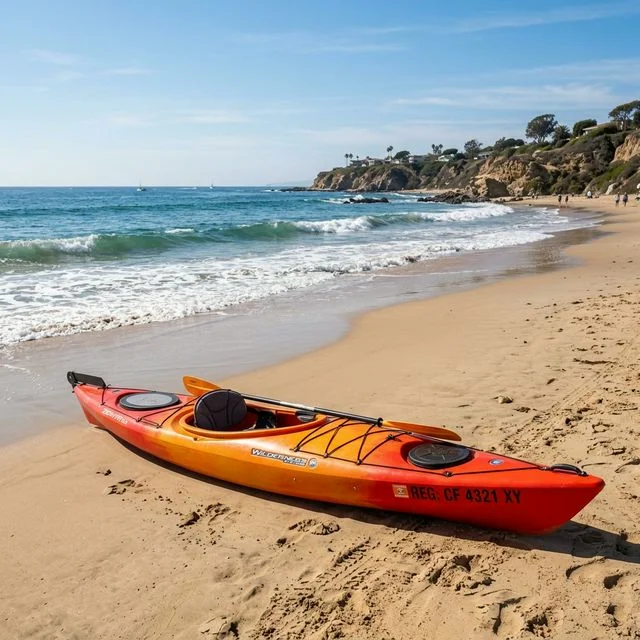
Quick Reference: What Needs Registration?
This decision chart covers the most common small watercraft scenarios in California:
The rule is simple: any motor of any size = registration required. This applies regardless of whether the motor is permanently mounted or temporarily attached. If you occasionally clip a trolling motor to your kayak, the vessel must be registered for those occasions — you cannot switch between registered and unregistered status.
Boater Card Requirements for Kayakers
The California Boater Card requirement — which became fully effective for all ages on January 1, 2025 — applies differently depending on your kayak's propulsion:
Non-motorized kayaks: No Boater Card required. You can paddle a kayak, canoe, or paddleboard on any California waterway without completing a boating safety course or carrying a Boater Card.
Motorized kayaks: Boater Card is required. Any person operating a kayak equipped with a motor must carry a valid California Boater Card. If you hold a boater education certificate from another state that was issued after completing a NASBLA-approved course, California generally recognizes it as equivalent.
Even if your kayak is non-motorized, taking a boating safety course is strongly recommended. The course covers navigation rules, safety equipment requirements, and emergency procedures that are valuable for all waterway users.
Quagga and Zebra Mussel Prevention
California takes the threat of invasive quagga and zebra mussels very seriously. These invasive species can devastate freshwater ecosystems and clog water infrastructure. If you use your kayak in California freshwater lakes and reservoirs, mussel prevention rules apply to you — even with a non-motorized vessel.
Mussel fee: Registered motorized vessels that operate in freshwater must pay a $16 Quagga and Zebra Mussel Infestation Prevention Fee as part of their registration. Non-motorized kayaks are not subject to this fee since they are not registered.
Inspection requirements: Many California lakes and reservoirs — especially popular destinations like Lake Tahoe, Shasta Lake, and the California Aqueduct system — require vessel inspections before launching. This applies to all watercraft including non-motorized kayaks. You may be required to show that your kayak is clean, drained, and dry before entering the water.
Clean, Drain, Dry protocol: After each use, clean all surfaces that contacted water, drain all water from the vessel and gear (including bait wells, bilge, and coolers), and dry everything thoroughly. Wait at least 5 days before launching in a different body of water, or use hot water (at least 140°F/60°C) to decontaminate equipment.
Some lakes have specific launch requirements beyond the general protocol. Check with the local managing agency before visiting a new lake — showing up without meeting inspection requirements can mean being turned away at the launch ramp.
Safety Equipment for Kayaks
Whether motorized or not, California law requires certain safety equipment on all watercraft. For kayaks, the requirements include:
| Equipment | Non-Motorized Kayak | Motorized Kayak |
|---|---|---|
| USCG-approved life jacket (per person) | Required | Required |
| Whistle or sound-producing device | Required | Required |
| Navigation lights (after sunset) | Required if on water after dark | Required |
| Fire extinguisher (Type B-I) | Not required | Required if enclosed fuel compartment |
| Visual distress signals (coastal waters) | Required on coastal waters | Required on coastal waters |
| CF number display | Not required | Required (3" block letters, both sides of bow) |
Children under 13 must wear a life jacket at all times while aboard any vessel, including kayaks, unless they are below deck or in an enclosed cabin. Adults must have a life jacket accessible — wearing it is strongly recommended but not legally required for adults on vessels over 16 feet. However, most kayaks are under 16 feet, so having the life jacket immediately accessible (not stored in a sealed dry bag) is the practical standard.
Popular California Kayaking Destinations and Local Rules
California offers exceptional kayaking from the Pacific coast to high-altitude mountain lakes. Here are some popular destinations with specific rules kayakers should know:
Monterey Bay and Channel Islands: Ocean kayaking requires visual distress signals and navigation lights if you will be on the water after sunset. Sea conditions can change rapidly — always check marine forecasts before launching. These areas are within the Monterey Bay National Marine Sanctuary and National Park boundaries, respectively, which impose additional regulations on vessel operations.
Lake Tahoe: Strict mussel inspection requirements. All watercraft (including non-motorized kayaks) must pass inspection before launching. Tahoe has specific watercraft inspection stations, and you may need to schedule an appointment during peak summer months.
Sacramento-San Joaquin Delta: Extensive waterway system popular with kayakers. Strong currents and commercial vessel traffic are primary hazards. Motorized vessels of all sizes must be registered. Stay aware of tidal flows and shipping lanes.
Big Bear Lake and Mountain Lakes: Many mountain lakes have specific launch procedures and mussel inspection requirements. Some lakes restrict or prohibit motorized vessels entirely. Check with the local USFS or county recreation department for specific rules before your trip.
How California Compares to Other States
California's approach to kayak registration is relatively common, but some states have stricter requirements. Here is how it compares:
| State | Non-Motorized Kayak Registration | Key Difference |
|---|---|---|
| California | Exempt | Any motor = registration required |
| Ohio | Required ($25) | All watercraft must be registered |
| Iowa | Required ($3–$10) | All vessels need registration |
| Minnesota | Required if 10ft+ | Large kayaks need registration |
| Pennsylvania | Required ($22) | All boats on state waterways |
| Oregon | Required if 10ft+ ($7) | Non-powered vessel permit |
| Florida | Exempt if <16ft non-motorized | Similar to California |
| Texas | Exempt if non-motorized | Similar to California |
California's exemption for non-motorized vessels is a benefit for casual paddlers. States like Ohio, Iowa, and Pennsylvania require registration for all watercraft regardless of propulsion. For details on California boat registration fees and requirements, visit our state page.
Frequently Asked Questions
Do I need to register a kayak in California?
Does a kayak with a trolling motor need to be registered?
Do I need a California Boater Card to kayak?
Do I need a life jacket for kayaking in California?
Are kayaks subject to mussel inspections in California?
Do I need to register a stand-up paddleboard (SUP) in California?
Sources
- California DMV — Vessel Registration (https://www.dmv.ca.gov/portal/vehicle-registration/vessel-registration/)
- California Division of Boating and Waterways — Boater Card (https://www.parks.ca.gov/?page_id=28728)
- California Division of Boating and Waterways — Boating Safety (https://dbw.parks.ca.gov/)
- California Department of Fish and Wildlife — Quagga/Zebra Mussel Prevention (https://wildlife.ca.gov/Conservation/Invasives/Quagga-Mussels)
This information is provided for reference purposes only. While we strive to keep data accurate and up-to-date, registration requirements, fees, and regulations may change without notice. Always contact your state's official registration agency for the most current and authoritative information before making any decisions.