Non-Resident Boating in Colorado: What You Need to Know
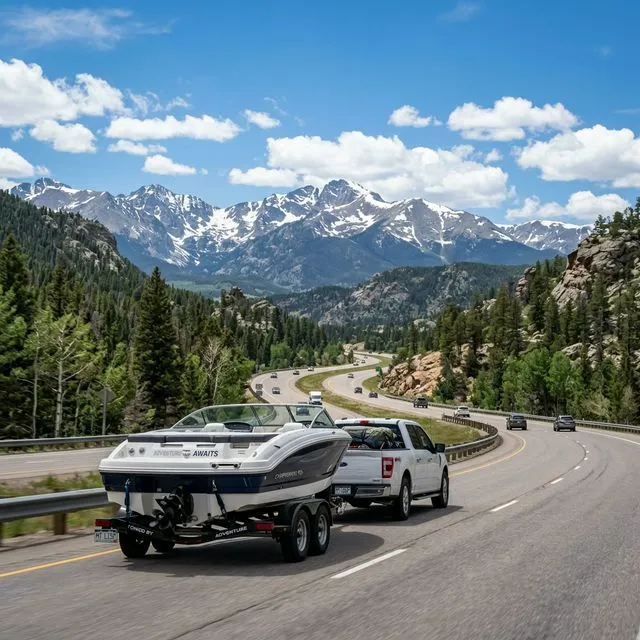
Colorado's alpine lakes and reservoirs draw boaters from across the country — whether it is a Utah family vacationing at Blue Mesa Reservoir, a Kansas angler heading to Pueblo Reservoir, or a Texas RVer towing their wakeboard boat to Dillon Reservoir. If you are bringing a boat to Colorado from another state, you need to understand three requirements that set Colorado apart from most other western states.
First, Colorado grants a 60-day exemption for non-resident boats with valid home-state registration. Second, every motorboat and sailboat — regardless of which state it is registered in — must carry a Colorado ANS stamp purchased at the higher non-resident rate of $50.00. Third, every trailered and motorized boat must pass through a mandatory AIS inspection before it can touch Colorado water.
This combination of rules makes Colorado one of the more regulated states for visiting boaters. However, with proper preparation, the process is straightforward. This guide covers every step: the 60-day exemption timeline, ANS stamp purchase, AIS inspection process, the Green Seal program, and what happens if you plan to stay beyond 60 days. For the full Colorado registration process, see our Colorado Boat Registration Guide.
The 60-Day Non-Resident Exemption
Non-residents may operate their boat on Colorado's public waters for up to 60 consecutive days without registering in Colorado, provided the vessel has a current, valid registration from the owner's home state. The registration card must be carried on the vessel at all times.
The 60-day clock starts on the date the boat first enters Colorado waters. It is not reset by leaving the state and returning — once 60 days of operation in Colorado have elapsed within a registration year, you must register with CPW.
Here is how Colorado's non-resident exemption compares to its neighboring states:
| State | Non-Resident Exemption | Additional Fees? | Mandatory Inspection? |
|---|---|---|---|
| Colorado | 60 days | $50 ANS stamp | Yes (77 stations) |
| Wyoming | 60 days | $30 AIS decal | At some locations |
| Utah | 90 days | No | At some locations |
| Arizona | 90 days | No | No statewide mandate |
| New Mexico | 90 days | No | No |
| Kansas | 60 days | No | No |
| Nebraska | 60 days | No | No |
| Oklahoma | 60 days | No | No |
Colorado stands out as the most regulated state in the region for visiting boaters: shorter exemption period than Arizona, Utah, and New Mexico, plus the mandatory ANS stamp and universal inspection requirement. For details on non-resident boating rules across all 50 states, see our dedicated comparison page.
Non-Resident ANS Stamp: $50 Requirement
Even during the 60-day exemption period, every non-resident motorboat and sailboat must carry a Colorado Aquatic Nuisance Species (ANS) stamp. The non-resident price is $50.00 — double the $25.00 resident rate.
You can purchase the ANS stamp through several channels before you arrive in Colorado:
Online: Purchase through cpwshop.com. You will receive a receipt that serves as proof of purchase. This is the most convenient option for planning ahead.
At a CPW office: Any Colorado Parks and Wildlife office sells ANS stamps in person.
At authorized sales locations: Various sporting goods stores and marinas across Colorado sell ANS stamps.
You must carry proof of purchase — either an electronic receipt on your phone or a printed copy — on your person or within the vessel while operating on Colorado waters. CPW officers and AIS inspectors routinely check for ANS stamp compliance.
Mandatory AIS Inspection for Non-Resident Boats
Every trailered and motorized boat entering Colorado waters must pass through a certified AIS (Aquatic Invasive Species) inspection. This requirement applies regardless of your state of origin — even if your boat was just inspected in another state.
The following diagram shows the process a non-resident boat goes through when arriving in Colorado:
What Happens During an AIS Inspection?
AIS inspections are conducted by CPW-certified inspectors at one of the 77 inspection and decontamination stations across Colorado. Inspections are free. Here is what to expect:
1. Hull and exterior check: The inspector visually examines the hull, propeller, trim tabs, and all exterior surfaces for attached organisms, mud, or plant material.
2. Interior compartment check: The inspector opens and checks bilge areas, live wells, bait buckets, rod holders, and any compartments that could hold standing water.
3. Trailer inspection: The trailer frame, rollers, bunks, and axle areas are checked for attached organisms or debris.
4. Drain verification: All drain plugs must be pulled and all water sources drained. If standing water is found, additional drying time or decontamination may be required.
If your boat passes inspection, you are cleared to launch. If the inspector finds any contamination — especially zebra or quagga mussels — the vessel must undergo a full hot-water decontamination procedure before it can enter Colorado waters. Decontamination involves flushing all water systems with 140°F (60°C) water. This process can take 1 to 2 hours.
The Green Seal and Receipt Program
Colorado's Green Seal and Receipt Program is designed to streamline the inspection process for boats that have been verified as clean. Here is how it works:
Getting a Green Seal: After your boat passes an exit inspection when leaving a Colorado lake or reservoir, a certified inspector applies a free green seal to your boat-trailer connection point. You also receive a white receipt.
Using the Green Seal: When you arrive at your next launch point, the inspector checks whether the green seal is intact and unbroken. If it is, your inspection is expedited — typically just a quick visual check rather than a full hull-to-bilge inspection.
Seal broken or missing? If the seal has been tampered with, is missing, or does not match the receipt, you go through the full standard inspection.
The Green Seal program is especially useful for non-residents making multiple stops at different Colorado lakes during a vacation. Plan your exits to always request a seal, and your subsequent launches will go much faster.
Green seals can also be obtained from CPW offices and certified marinas/dealers, though they must be applied by a certified inspector.
What If You Stay Beyond 60 Days?
If you plan to operate your boat in Colorado for more than 60 days in a calendar year, you must register with CPW just like a Colorado resident. This involves:
Registration Application: Complete the CPW Boat Registration Application and submit it by mail or in person at a CPW office. First-time registrations cannot be done online.
Registration Fees: $35.25 to $55.25 depending on vessel length (same as residents). Annual renewal required.
ANS Stamp: You will continue to pay the $50.00 non-resident ANS stamp rate each year, unless you establish Colorado residency.
Proof of Ownership: Your home-state registration or title serves as proof of ownership for the CPW registration application.
Typical scenarios where the 60-day limit becomes an issue include: seasonal residence at a Colorado lake house, out-of-state college students keeping a boat at a local marina, and RVers who spend extended summers in Colorado's mountain towns.
Popular Colorado Boating Destinations for Visitors
Colorado's reservoirs and lakes offer exceptional boating in dramatic mountain settings. Here are the most popular destinations for visiting boaters, along with practical notes on AIS inspection availability:
| Lake/Reservoir | Region | Notable Feature | On-Site Inspection |
|---|---|---|---|
| Blue Mesa Reservoir | Western Slope | Colorado's largest body of water | Yes |
| Dillon Reservoir | Summit County | Sailboating at 9,017 ft elevation | Yes |
| Lake Granby | Grand County | Popular for waterskiing and wakeboarding | Yes |
| Pueblo Reservoir | Southern Front Range | Warm water, long season | Yes |
| Horsetooth Reservoir | Fort Collins area | Close to Front Range cities | Yes |
| Chatfield Reservoir | Denver metro | Closest major reservoir to Denver | Yes |
| Navajo Reservoir | New Mexico border | Crosses CO/NM state line | Yes |
All major reservoirs in Colorado have AIS inspection stations on-site during the boating season (typically May through September, though hours and dates vary). Check the CPW inspection station map for current hours before heading out.
Non-Resident Checklist: Before You Launch
Use this step-by-step checklist to ensure you are fully prepared to boat in Colorado as a non-resident:
Common Mistakes Non-Residents Make
1. Arriving without an ANS stamp: You can purchase the stamp online at cpwshop.com before your trip. Buying in advance avoids a scramble at the boat ramp when you are eager to launch.
2. Bypassing the inspection station: Some boaters see the inspection station and assume it is optional. It is not. Bypassing a station is a citable offense. If the station is closed (early morning or late season), contact CPW for instructions — some ramps have self-service seal programs.
3. Not cleaning the boat before crossing state lines: If you arrive at a Colorado inspection station with a dirty hull, standing water, or plant material, your inspection will take much longer and may require decontamination. The Clean, Drain, Dry protocol should be done before you leave your home state.
4. Assuming home-state inspections count: Even if your boat was inspected in Utah, Wyoming, or any other state, you still need a Colorado AIS inspection. Each state runs its own independent program.
5. Exceeding the 60-day limit: If you plan an extended stay, register early. CPW officers at boat ramps and marinas can check registration dates. Operating with an expired exemption results in a fine similar to driving an unregistered vehicle.
6. Not carrying all required documents: You need three things on the boat: home-state registration card, ANS stamp proof, and (for operators 14–17) a boating safety certificate. A missing document can result in a citation even if you are otherwise in compliance.
Frequently Asked Questions
How long can a non-resident boat without Colorado registration?
Do non-residents need a Colorado ANS stamp?
Is the AIS inspection mandatory for non-resident boats?
What is the Green Seal program in Colorado?
Does Colorado accept boating safety certificates from other states?
What happens if I fail the AIS inspection?
Sources
- Colorado Parks and Wildlife — Boating Registration (https://cpw.state.co.us/thingstodo/Pages/Boating.aspx)
- CPW — Aquatic Nuisance Species Inspections (https://cpw.state.co.us/aboutus/Pages/ISP.aspx)
- CPW — ANS Stamp Purchase (https://cpwshop.com)
- CPW — Boating Safety Laws (https://cpw.state.co.us/thingstodo/Pages/BoatingSafety.aspx)
This information is provided for reference purposes only. While we strive to keep data accurate and up-to-date, registration requirements, fees, and regulations may change without notice. Always contact your state's official registration agency for the most current and authoritative information before making any decisions.