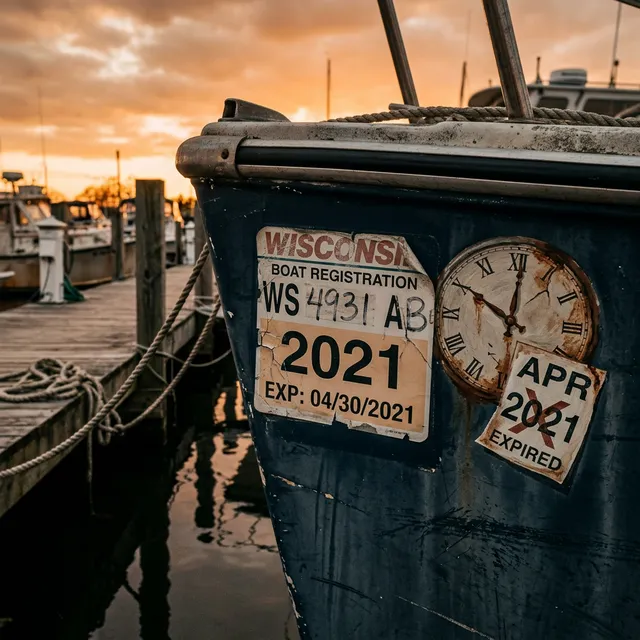
What Happens When Your Boat Registration Expires
A boat with an expired registration is not legally permitted to operate on public waterways in any state. If law enforcement stops you while operating an unregistered vessel, you face fines, potential impoundment of your boat, and in some states, misdemeanor criminal charges. Even if you are not actively using the boat, an expired registration can complicate future sales, insurance claims, and legal matters.
Boat registration is not a one-time process. Most states require renewal every one to three years, depending on the jurisdiction. When your registration expires, your validation decals become invalid, your registration certificate is no longer current, and you lose the legal right to operate the vessel. The good news is that renewing an expired registration is almost always straightforward — but the longer you wait, the more penalties you may accumulate.
This guide explains the consequences of an expired registration, breaks down penalties across major states, and walks you through the renewal process whether your registration just lapsed or has been expired for years.
Penalties and Fines by State
Penalties for operating with an expired registration vary significantly from state to state. Most states treat it as a noncriminal infraction (similar to a traffic ticket), but fines can be substantial and repeat violations may escalate the consequences.
Michigan — Operating a vessel with an expired registration decal can result in a civil infraction fine of up to $500. Michigan boat registrations are valid for three years.
Florida — Florida treats expired registration as a noncriminal infraction. The severity depends on how long the registration has been expired: less than six months is a less severe offense, while more than six months can result in higher penalties. Florida registrations can be renewed for one or two years.
Pennsylvania — Operating an unregistered vessel in Pennsylvania can result in fines ranging from $100 to $500. The Pennsylvania Fish and Boat Commission enforces registration compliance on all state waterways.
South Carolina — South Carolina imposes a $15 late fee if the renewal application is not received within 30 days after expiration, increasing to $30 if not received within 60 days.
Arizona — Arizona charges a $5 penalty fee for late registration renewal, in addition to the full registration fee.
California — California charges an $8 penalty fee for late transfers. The Mussel Fee, a separate required fee, is not subject to a late penalty.
Missouri — Missouri does not charge a late renewal penalty for boat registrations, which are renewed every three years. However, operating an unregistered vessel is still a violation.
Beyond state-level fines, law enforcement officers may also issue citations for safety equipment violations discovered during a stop for expired registration. These additional fines can compound the total cost significantly.
How to Renew an Expired Registration
Renewing an expired boat registration follows essentially the same process as a standard renewal, though some states add late fees or require additional steps for long-expired registrations. Here is the general process:
Step 1: Gather your documents. You will need your current (expired) registration certificate or renewal notice, proof of ownership (title or previous registration), and a valid photo ID. Some states also require proof of insurance.
Step 2: Choose your renewal method. Most states offer multiple renewal options: online through the state DMV or DNR website, by mail using a renewal form and check, in person at a local registry office, or in some states by phone. Online renewal is typically the fastest option.
Step 3: Pay the fees. You will owe the standard registration renewal fee plus any applicable late fees or penalties. Some states may also require you to pay back years of registration if the boat was registered but the fee lapsed for multiple renewal periods.
Step 4: Receive new decals. Upon successful renewal, you will receive a new registration certificate and validation decals. Apply the new decals to your vessel immediately, covering or removing the expired decals.
For a detailed walkthrough of the standard renewal process and state-by-state requirements, see our boat registration renewal guide.
Long-Expired Registrations: What If It Has Been Years?
If your boat registration has been expired for a significant period — typically 48 months or more — the renewal process may differ from standard renewals. Some states require an in-person visit to complete the process, as online or mail renewal may not be available for long-expired registrations.
In most cases, you can still renew without starting from scratch. You will generally need to provide the original registration documentation (or at least the registration number), proof of ownership, and payment for the current renewal period. Some states may require back fees for missed renewal periods, while others only charge the current period's fee.
If you cannot locate any of your previous registration documents, you may need to request a duplicate registration first (see our lost registration replacement guide) or provide alternative proof of ownership such as a title document or bill of sale.
For USCG-documented vessels, the reinstatement process for long-expired documentation is generally straightforward. The Coast Guard does not charge additional fees or penalties for elapsed time, though you will need to pay the current year's documentation fee.
Can You Operate a Boat With Expired Registration?
No. Operating a boat with an expired registration on public waterways is illegal in all states. Law enforcement agencies routinely check registration status during on-water patrols, and expired decals are easy to spot visually.
If you are stopped with an expired registration, the officer will typically issue a citation (fine) and may require you to return to shore immediately. In severe cases — particularly for registrations expired for extended periods or for repeat offenders — the vessel may be impounded until registration is renewed.
Your boat's registration certificate must be on board the vessel whenever it is being operated. If you cannot produce a valid, current certificate during a law enforcement stop, you may be cited even if the registration is current but the certificate is not available.
Storage situations are different. If your boat is stored on a trailer or in dry dock and is not being operated on public waterways, most states do not require current registration. However, some states have provisions that require registration to remain current even for stored vessels, especially if the boat remains in the water at a marina or mooring.
How to Avoid Expired Registration
Preventing a registration lapse is far easier (and cheaper) than dealing with one after the fact. Here are practical strategies to stay current:
Set a calendar reminder at least 60 days before your registration expires. Most states send renewal notices by mail one to two months before expiration, but mail can be lost or delayed — do not rely on it as your only reminder.
Opt for online renewal whenever available. Most states offer convenient online portals through their DMV or DNR websites, allowing you to renew in minutes and receive confirmation immediately. Some states even allow you to renew early without losing the remaining time on your current registration.
Consider multi-year registration if your state offers it. Many states allow you to register for two or three years at a time, reducing the frequency of renewals and the risk of an accidental lapse.
Keep your mailing address current with your state's registration agency. If you have moved since your last renewal, update your address to ensure renewal notices reach you.
Use our registration fee calculator to budget for upcoming renewal costs, and visit your state's registration page for specific renewal deadlines and procedures.
Frequently Asked Questions
How much is the fine for an expired boat registration?
Can I renew an expired boat registration online?
Do I have to pay back fees for years I missed?
Will I get pulled over for expired boat registration?
Can I sell a boat with an expired registration?
Is there a grace period after boat registration expires?
Sources
- NASBLA — National Association of State Boating Law Administrators (https://www.nasbla.org/)
- Individual state DMV/DNR official registration and penalty schedules
- U.S. Coast Guard — Recreational Vessel Documentation (https://www.uscg.mil/)
This information is provided for reference purposes only. While we strive to keep data accurate and up-to-date, registration requirements, fees, and regulations may change without notice. Always contact your state's official registration agency for the most current and authoritative information before making any decisions.