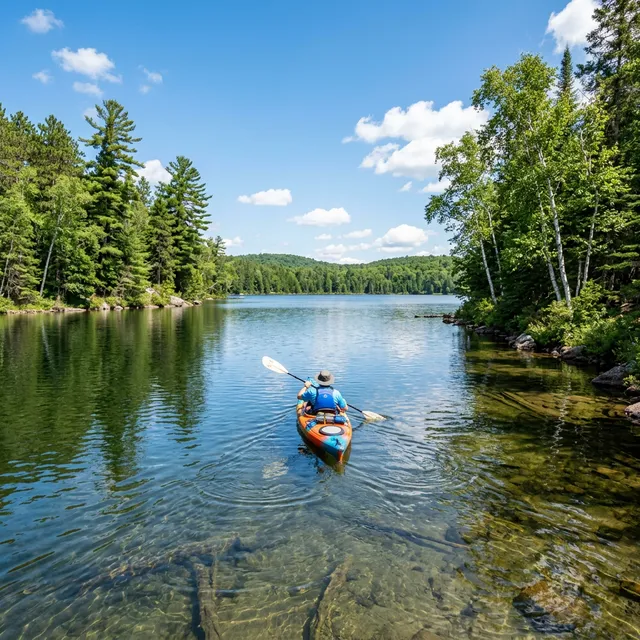
Quick Answer: Do You Have to Register a Kayak in Michigan?
No, you do not have to register a paddle-only kayak or canoe in Michigan. A small hand-powered rowboat can also be exempt, but longer rowboats and rental or commercial use can have a different path. You do have to register a kayak, canoe, or rowboat if you add any motor, including an electric trolling motor.
| Vessel in the question | Michigan registration? | Why |
|---|---|---|
| Canoe without a motor | No | Canoe exemption applies |
| 12-ft kayak without a motor | No | Kayak exemption applies |
| 14-ft rowboat without a motor | No | Small hand-powered rowboat |
| Personal watercraft | Yes | Motorized vessel |
That exact distinction matters because many searchers ask "do you have to register a kayak in Michigan" when they really need to compare paddle kayaks, canoes, trolling motors, and small fishing boats. For kayaks and canoes, the dividing line is simple: no motor means no registration; motorized means registration. For rowboats and other hand-powered craft, check the length and use category.
If you are checking a kayak, canoe, or paddleboard before a trip, use the Kayak Registration Quiz for a quick state-specific check, then verify final requirements with the Michigan Secretary of State or DNR before launching.
Michigan Kayak Rule: Paddle-Only Kayaks Are Exempt
Michigan's kayak and canoe rule is straightforward: if a kayak or canoe has no motor, it does not need to be registered. Other hand-powered boats have a length boundary, so do not apply the kayak exemption to every non-motorized vessel without checking the category.
In practical terms, paddle-only kayaks and canoes are exempt, and a 14-foot rowboat without a motor is also exempt. A larger non-kayak hand-powered boat can have a different registration path, especially if it is used for rental or commercial purposes.
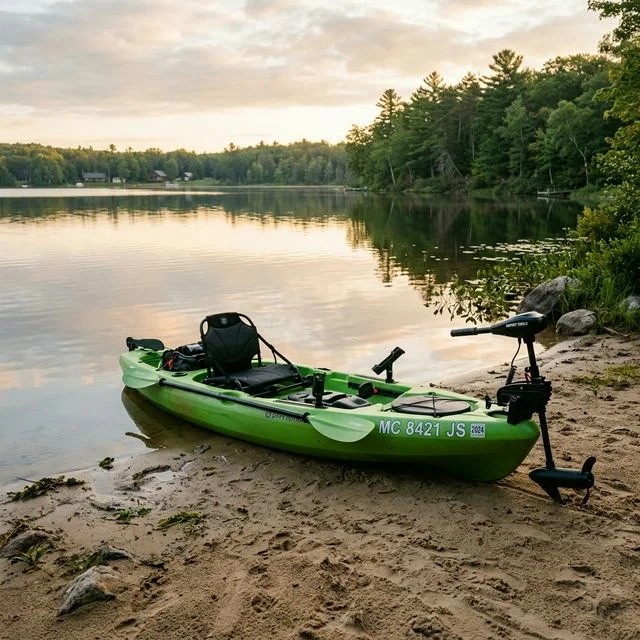
The moment you add any type of motor — including a small electric trolling motor — the vessel becomes motorized and must be registered with the Michigan Secretary of State. There is no minimum horsepower exception. Even a 30-pound thrust trolling motor triggers the registration requirement.
This is one of the most frequently asked questions Michigan paddlers have, so let's break down every scenario:
| Vessel Type | Motor? | Registration? | Notes |
|---|---|---|---|
| Paddle kayak | No | Not required | Kayak/canoe exemption applies |
| Kayak with trolling motor | Yes | Required | Any motor = must register |
| Canoe | No | Not required | Kayak/canoe exemption applies |
| Canoe with electric motor | Yes | Required | Electric = still motorized |
| Stand-up paddleboard | No | Usually not required | Verify if outfitted with motor or rented commercially |
| Rowboat / rowing shell | No | Depends | Hand-powered boats over 16 ft can differ from kayak/canoe rules |
| Pedal kayak | No | Not required | Pedal = human-powered kayak |
| 12 ft jon boat with outboard | Yes | Required | Motorized, even if small |
Adding a Trolling Motor: What Changes
Many Michigan kayak anglers add electric trolling motors to their fishing kayaks. This is perfectly legal, but it triggers several requirements beyond simple registration:
In practical terms, adding a trolling motor to your kayak in Michigan means registering at the Secretary of State, displaying your MC number in 3-inch letters on both sides of the bow, and carrying your registration card any time you're on the water.
The registration fee for a motorized kayak (typically under 12 ft) is in the lowest tier — $14 for three years, making it one of the cheapest registrations available. For exact fees by vessel length, check our registration fee calculator.
Boater Education for Motorized Kayak Operators
Michigan's boater education requirement applies to motorized kayak operators just as it does to all motorized vessel operators:
- Born on or after July 1, 1996: Must carry a valid boating safety certificate to operate any motorized vessel, including a kayak with a trolling motor exceeding 6 horsepower
- Born before July 1, 1996: No boater education certificate required for standard motorized vessels
- Under 12 years old: Cannot operate motorized vessels over 6 HP; under 6 HP requires adult supervision
- Age 12-15: Can operate motorized vessels with safety certificate; must have adult on board for engines over 6 HP
In practice, most trolling motors used on kayaks are well under 6 HP (a typical 55 lb thrust motor equals about 0.8 HP). However, the registration requirement applies regardless of horsepower — even a 30 lb thrust motor requires registration. For full boater education details, see our national boater education guide.
Safety Equipment Requirements by Boat Type
Michigan's safety equipment requirements vary based on whether you're paddling or motoring, and whether you're on inland waters or the Great Lakes:
| Equipment | Paddle Kayak (Inland) | Paddle Kayak (Great Lakes) | Motorized Kayak |
|---|---|---|---|
| PFD (per person) | Required | Required | Required |
| Sound device (whistle) | Recommended | Required | Required |
| Visual distress signals | Not required | Required | Required (Great Lakes only) |
| Navigation lights | Sunset-sunrise | Sunset-sunrise | Sunset-sunrise |
| Fire extinguisher | No | No | Only if enclosed fuel |
For kayakers venturing onto the Great Lakes, the safety requirements increase significantly. Visual distress signals (flares or flag/light combo) are mandatory on all Great Lakes waters. This applies even to paddle-only kayaks on the Great Lakes — a detail many inland paddlers miss when they first venture onto Lake Michigan or Lake Huron.
Public Access Sites and Launch Fees
Michigan has over 1,400 public boat launch sites managed by the DNR and local municipalities. For motorized boats, many launch sites require a Michigan DNR Waterways Access Sticker to use the public launch ramp — separate from registration.
Non-motorized kayaks and canoes can generally use public access sites without a launch fee, though some popular sites may have parking fees. Paddle-in access points along rivers and streams are typically free.
If you're launching a motorized kayak from a state-managed launch ramp, you may need the watercraft access sticker. Check the specific access site rules on the Michigan DNR website before your trip.
Kayak Fishing in Michigan: Additional Rules
Michigan is a premier destination for kayak fishing, with abundant bass, walleye, trout, and salmon opportunities on its 11,000+ inland lakes. Beyond registration rules, kayak anglers need to be aware of:
- Michigan Fishing License: Required for all anglers age 17 and older; separate from boat registration. Available online or at DNR license agents
- Invasive species laws: Michigan law requires draining all water from kayaks, canoes, and other watercraft before transporting between water bodies to prevent spreading invasive species like zebra mussels and Eurasian milfoil
- River access rights: Michigan generally protects public access to navigable waterways, but specific access points and portage rules vary
- No-wake zones: Even paddle-powered kayaks should be aware of no-wake zones, especially near marinas, beaches, and wildlife nesting areas
For sport fishing regulations specific to each waterway, consult the Michigan DNR Fishing Guide — it's updated annually with species-specific seasons, size limits, and bag limits.
Great Lakes Kayaking: Extra Considerations
Paddling on the Great Lakes is a distinctly different experience from inland lake kayaking. Michigan's Great Lakes coastline stretches over 3,200 miles and offers world-class paddling, but also demands greater preparation:
- Weather changes rapidly: Wind and waves can build quickly on open water; always check NOAA marine forecasts before launching
- Cold water risk: Great Lakes surface temperatures can be dangerously cold even in summer; a dry suit or wet suit is recommended for spring and fall paddling
- Visual distress signals: Required for all vessels on Great Lakes waters, including paddle kayaks
- Self-rescue skills: Know how to re-enter your kayak from the water; practice in calm conditions first
- Float plan: File a float plan with someone on shore detailing your route and expected return time
The Michigan DNR and local kayak clubs offer Great Lakes paddling courses that cover navigation, weather reading, and rescue techniques. These are highly recommended before your first Great Lakes trip.
How Neighboring States Handle Kayak Registration
If you paddle across state lines on the Great Lakes, do not assume Michigan's no-motor exemption follows you. Nearby states use different rules for hand-powered craft:
| State | Non-motorized kayak/canoe | Motorized kayak/canoe |
|---|---|---|
| Michigan | Exempt | Must register ($14/3 yr under 12 ft) |
| Ohio | Registration required | Must register |
| Wisconsin | Generally exempt unless sail-equipped | Must register |
| Indiana | Generally exempt in current site data | Must register |
| Minnesota | 10 ft or less exempt; over 10 ft licensed | Must register/license |
The practical rule is: Michigan exempts paddle-only kayaks, but some nearby states register hand-powered boats by length or category. Use the kayak registration quiz or the relevant state page before trailering a kayak across state lines.
Frequently Asked Questions
Do I need to register my kayak in Michigan?
Does adding a trolling motor to my kayak require registration?
Do I need a boater safety certificate for a motorized kayak?
Do I need a PFD in my kayak in Michigan?
Are pedal-drive kayaks considered motorized in Michigan?
Sources
- Michigan Department of Natural Resources — Boating Laws (https://www.michigan.gov/dnr/things-to-do/boating)
- Michigan Secretary of State — Watercraft Registration (https://www.michigan.gov/sos/vehicle/boat)
- USCG Boating Safety — Equipment Requirements (https://www.uscgboating.org/recreational-boaters/equipment-requirements.php)
This information is provided for reference purposes only. While we strive to keep data accurate and up-to-date, registration requirements, fees, and regulations may change without notice. Always contact your state's official registration agency for the most current and authoritative information before making any decisions.