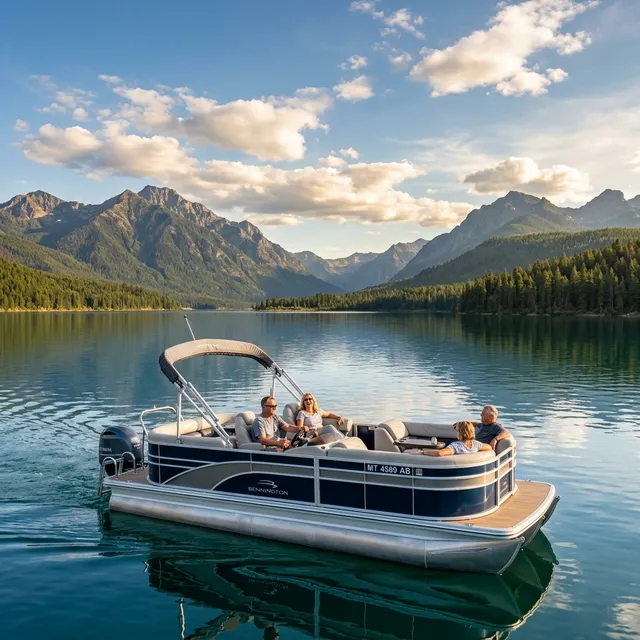
Montana Has Zero Sales Tax on Boats
Montana is one of only five states in the United States that does not impose a general sales tax. The others are Oregon, Delaware, New Hampshire, and Alaska (though Alaska allows local sales taxes in some areas). This means that when you purchase a boat in Montana — whether it costs $5,000 or $500,000 — you pay $0 in state sales tax.
This zero-tax policy applies to every type of vessel: motorboats, sailboats, personal watercraft, pontoons, and kayaks with motors. There is no cap, no exemption threshold, and no complicated calculation. The tax rate is simply zero.
Beyond sales tax, Montana also has no personal property tax on boats. In many states — including Georgia, Indiana, and Maryland — boat owners pay an annual property tax or excise tax based on the vessel's value. Montana charges none of this. Your only ongoing cost is the AIS Prevention Pass ($30/year for non-resident motorized or free for residents) and validation decal renewal every three years.
Combined with Montana's permanent registration system (a one-time fee of $65.50 to $295.50), the total cost of boat ownership in Montana is among the lowest in the nation. For a complete breakdown of registration fees, see our Montana Boat Registration guide.
How Montana's No-Tax Advantage Compares
To put Montana's advantage in perspective, consider the savings on a $100,000 boat purchase:
| State | Sales Tax Rate | Tax on $100K Boat | Tax on $250K Boat | Cap/Notes |
|---|---|---|---|---|
| Montana | 0% | $0 | $0 | No sales tax |
| Idaho | 6% | $6,000 | $15,000 | No cap |
| Wyoming | 4% | $4,000 | $10,000 | No cap |
| North Dakota | 5% | $5,000 | $12,500 | No cap |
| South Dakota | 4.5% | $4,500 | $11,250 | No cap |
| Florida | 6% | $6,000 | $15,000 | Cap at $18,000 |
| California | 7.25%+ | $7,250+ | $18,125+ | + local taxes up to 10.75% |
On a $250,000 boat, a Montana buyer saves $15,000 compared to Idaho, $10,000 compared to Wyoming, and up to $26,875 compared to California. These savings are the primary driver behind the Montana LLC boat registration strategy that has grown significantly over the past decade.
The Montana LLC Boat Registration Strategy
The Montana LLC strategy is a legal framework used by out-of-state boat buyers to take advantage of Montana's zero sales tax. Here is how it works:
Step 1 — Form a Montana LLC: You create a Limited Liability Company in Montana. The filing fee with the Montana Secretary of State is $35. You must designate a Montana registered agent (typically a service that charges $49 to $125 per year). Several companies specialize in forming Montana LLCs specifically for boat and RV registration.
Step 2 — The LLC Purchases the Boat: The LLC — not you personally — is the legal buyer named on the Bill of Sale and purchase contract. The LLC makes the purchase from the dealer or private seller.
Step 3 — Register Under the LLC: The LLC applies for a Montana Certificate of Ownership (title) and permanent registration through the County Treasurer's Office. The title and registration are issued in the LLC's name. Since the purchase occurred in Montana (or the LLC is a Montana entity), no sales tax applies.
Step 4 — Use the Boat: As the LLC's managing member, you operate the LLC-owned vessel under its Montana registration. The boat can be used in other states, though you should be aware of potential legal issues (see below).
Risks and Legal Considerations of the Montana LLC Strategy
While the Montana LLC strategy is legal in Montana, it carries risks that every buyer should understand before proceeding:
Home State Use Tax: Many states impose a "use tax" on items purchased out of state but used within their borders. If you live in California, Florida, or Texas and keep a Montana-registered LLC boat at a local marina, your home state may demand payment of their sales tax (plus penalties and interest). California in particular has aggressively pursued Montana LLC-registered boats stored in California.
Insurance Complications: Some insurance companies will not write policies for LLC-owned vessels, or they may charge higher premiums. Make sure your insurance carrier understands and accepts the LLC ownership structure before purchasing.
Coast Guard Documentation: If your boat is USCG-documented rather than state-registered, the documentation is federal and not tied to Montana's tax environment. However, some owners use both Montana registration and USCG documentation.
The LLC Must Be Legitimate: A Montana LLC that exists solely to avoid sales tax and has no other business purpose may be challenged by your home state as a sham entity. The stronger your legitimate business reasons for the LLC — asset protection, privacy, multi-owner management — the better your legal position.
For a broader perspective on boat taxes across all 50 states, see our comprehensive guide on boat sales tax by state.
Total Cost of Boat Ownership in Montana
Beyond zero sales tax, here is a complete picture of what Montana boat ownership costs compared to neighboring states:
| Cost Category | Montana | Idaho | Wyoming |
|---|---|---|---|
| Sales Tax on $100K boat | $0 | $6,000 | $4,000 |
| Title fee | $12.00 | N/A (no title) | N/A (no title) |
| Registration (19+ ft) | $295.50 (one-time) | ~$20/yr | ~$15/yr |
| Annual property tax | $0 | $0 | $0 |
| 5-Year Total | $307.50 | $6,100 | $4,075 |
Over a 5-year ownership period, a Montana 19-foot boat owner pays just $307.50 in total government fees (title + one-time registration), compared to $6,100 in Idaho and $4,075 in Wyoming. This does not include the LLC maintenance costs ($20/year annual report) if applicable. For a personalized estimate, use our Boat Registration Fee Calculator.
The "Tax-Free Triangle": Montana, Oregon & Delaware
Montana, Oregon, and Delaware form what boat buyers call the "Tax-Free Triangle" — three states with zero general sales tax that attract vessel registrations from across the country. Here is how they compare:
Among these three states, Montana offers the most complete package for boat buyers: zero sales tax, a formal title system that provides clear proof of ownership, permanent registration with no annual fees, and an established LLC registration industry. Oregon lacks a title system and does not have the LLC infrastructure for out-of-state buyers. Delaware charges higher LLC filing fees ($90 vs. Montana's $35) and requires annual registration rather than permanent.
What About the Resort Tax?
Montana does have a resort tax — a 3% to 4% tax on luxury goods and services in designated resort communities like Big Sky, Whitefish, and West Yellowstone. However, this tax applies only to specific categories: accommodations, restaurant meals, bar drinks, and retail purchases of luxury items within those resort zones.
The resort tax does not apply to boat purchases. Whether you buy a boat from a dealer in Billings, Missoula, or even a resort community, the transaction is exempt from the resort tax. The only taxes you may encounter are federal excise taxes on certain fuel types used in boating — and those apply nationwide regardless of state.
Other Taxes and Fees to Know About
While Montana has no sales tax or property tax on boats, there are a few other financial obligations to be aware of:
Title Fee ($12.00): A one-time fee when you apply for a Certificate of Ownership. Charged for both new titles and transfers. For details on the title transfer process, see our Montana Boat Title Transfer guide.
Permanent Registration Fee ($65.50-$295.50): A one-time fee based on vessel length. No annual renewal. Validation decals (3-year) can be renewed at no cost through FWP.
AIS Prevention Pass (Non-residents): Non-residents must purchase an annual Vessel AIS Prevention Pass: $30 for motorized watercraft and $10 for non-motorized. This pass prevents the spread of aquatic invasive species in Montana's waterways. Expires December 31 each year. For more on this, see our Montana non-resident boating guide.
Federal Fuel Tax: Gasoline and diesel used in boats are subject to federal excise taxes. This applies uniformly across all 50 states and is not unique to Montana.
Montana LLC Annual Report ($20/year): If you register your boat through a Montana LLC, the LLC must file an annual report with the Secretary of State by April 15. The filing fee is $20 ($35 if filed late). This is a business obligation, not a boat-specific tax.
Common Questions About Montana Boat Taxes
Here are the most common misconceptions and questions about taxes when purchasing a boat in Montana:
"Is there a use tax in Montana?" No. Montana does not have a use tax, sales tax, or value-added tax of any kind at the state level. If you purchase and register a boat in Montana, the state of Montana will never tax the purchase.
"Do I have to live in Montana to register a boat there?" No. Both residents and non-residents can register boats in Montana. Non-residents typically use a Montana LLC as the registered owner. However, if you are a non-resident, your home state may impose its own use tax if the boat is primarily kept in that state.
"Can I buy from any state and avoid tax?" You can buy a boat anywhere and bring it to Montana for registration. Montana will not charge sales tax regardless of where the boat was purchased. However, if the purchase occurred in a state with sales tax and payment was already collected, you may need to dispute with that state — Montana does not issue credit for taxes paid to other states (because Montana does not collect any).
Frequently Asked Questions
Does Montana charge sales tax on boat purchases?
How does the Montana LLC boat registration strategy work?
Is it legal to register a boat in Montana through an LLC?
What is the total cost to register a boat in Montana?
What other states have no sales tax on boats?
Does the Montana resort tax apply to boat purchases?
Sources
- Montana Department of Revenue — Tax Overview (https://mtrevenue.gov)
- Montana Fish, Wildlife & Parks — Boating Registration Fees (https://fwp.mt.gov/activities/boating/registration)
- Montana Secretary of State — LLC Filing (https://sosmt.gov)
- Montana Code Annotated — Title 15 (Taxation)
This information is provided for reference purposes only. While we strive to keep data accurate and up-to-date, registration requirements, fees, and regulations may change without notice. Always contact your state's official registration agency for the most current and authoritative information before making any decisions.