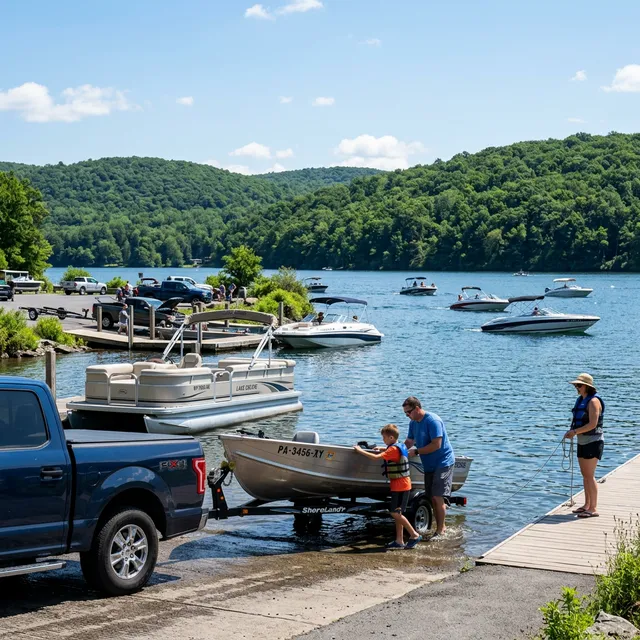
Non-Resident Boating in Pennsylvania: The Basics
Pennsylvania shares borders with six states — New York, New Jersey, Delaware, Maryland, West Virginia, and Ohio — and its waterways are popular destinations for non-resident boaters. From Lake Erie in the northwest to the Delaware River in the east, cross-border boating is common. The Pennsylvania Fish and Boat Commission (PFBC) has clear rules governing how visitors can legally operate boats on PA waterways.
The good news: if your boat is properly registered in your home state, you can enjoy Pennsylvania waters for a reasonable period without going through the full PA registration process. Here's everything you need to know. For complete PA registration details, see our Pennsylvania Boat Registration guide.
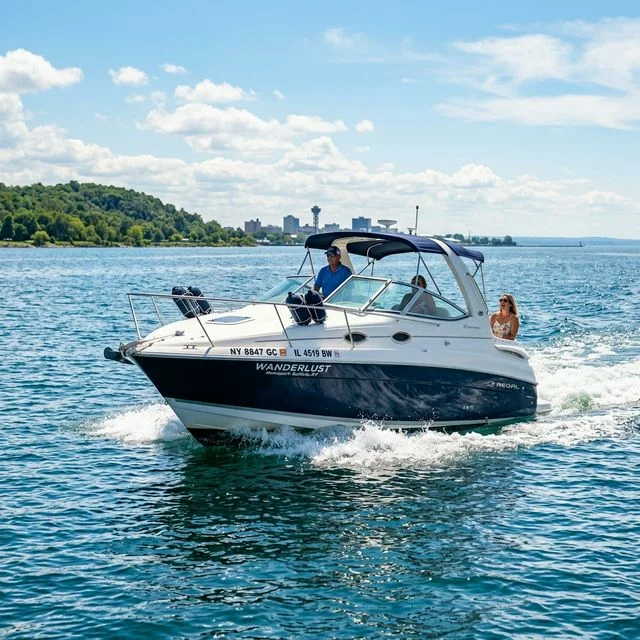
The 60-Day Grace Period
Pennsylvania recognizes valid out-of-state boat registrations for temporary use. As a non-resident with a currently valid registration from your home state, you may operate your boat on Pennsylvania waterways without registering in PA.
However, if your boat will be used in Pennsylvania for more than 60 consecutive days, or if Pennsylvania is the state of primary use (the state where your boat spends more time on the water than any other), you must register the boat in Pennsylvania.
This 60-day window is shorter than some neighboring states but consistent with others. Here's how Pennsylvania compares:
| State | Grace Period | Notes |
|---|---|---|
| Pennsylvania | 60 days | Or if PA is state of primary use |
| New York | 90 days | Longer window for visitors |
| New Jersey | Unlimited* | *Must have valid home-state registration |
| Maryland | 90 days | Within 12-month period |
| Ohio | 60 days | Same as PA |
| West Virginia | 60 days | Same as PA |
| Delaware | 60 days | Must register after 60 days |
Pennsylvania's 6 Neighboring States: Shared Waterways
Many of Pennsylvania's major waterways form borders with neighboring states or connect to interstate waters. Understanding which body of water you're on matters for jurisdiction:
Key shared waterways to know:
Delaware River (PA/NJ/DE): This major interstate waterway forms Pennsylvania's eastern border. When boating on the Delaware, you're generally under the jurisdiction of whichever state's shoreline you're closer to. Both PA and NJ recognize each other's registrations, but have different boating laws. The Delaware River Basin Commission provides additional oversight.
Lake Erie (PA/NY/OH): Pennsylvania's short but active Lake Erie shoreline at Erie is adjacent to New York and Ohio waters. PA-registered boats can freely navigate into NY and OH waters (and vice versa) with valid registration.
Ohio River (PA/WV/OH): The western border waterway passes through Pittsburgh and multiple jurisdictions. WV and OH both share the 60-day grace period with PA.
When Non-Residents Must Register in Pennsylvania
As a non-resident, you must register your boat in Pennsylvania if any of the following conditions apply:
1. State of primary use: If your boat spends more time on Pennsylvania waters than in any other single state, PA is your state of primary use and registration is mandatory — regardless of where you live or where the boat is physically stored.
2. Exceeded 60-day continuous use: If your boat has been used on PA waterways for more than 60 consecutive days, you must register.
3. Unpowered boats at PFBC or DCNR access areas: Pennsylvania has a unique rule for unpowered boats (kayaks, canoes, rowboats, SUPs). Non-motorized vessels used at PFBC or DCNR State Park/Forest access areas must either have a PA registration ($22/2-yr) or purchase a PFBC launch permit ($10/1-yr). This applies even to properly registered out-of-state unpowered craft on short visits. For full kayak rules, see our Pennsylvania Kayak Registration guide.
Registration Decision Flowchart for Non-Residents
Use this decision diagram to determine whether you need Pennsylvania registration:
Boater Safety Education: Does PA Recognize Your Certificate?
Pennsylvania recognizes NASBLA-approved boater education certificates from all other states. If you hold a valid boating safety certificate from your home state, it satisfies Pennsylvania's education requirements.
Pennsylvania requires a Boating Safety Education Certificate for:
All PWC/jet ski operators — regardless of age or birth date. This is mandatory, no exceptions.
Motorboat operators born on or after January 1, 1982 — only if operating boats with motors exceeding 25 HP.
If you're a non-resident born before 1982 and operating a standard motorboat (not a PWC), you do not need a boater education certificate in Pennsylvania. However, all PWC operators need certification regardless of age or residency. For detailed PWC rules, see our Pennsylvania Jet Ski & PWC Laws guide.
Non-Resident Registration: How to Register in PA
If you need to register your boat in Pennsylvania (because it's your state of primary use or you've exceeded 60 days), here's the process:
1. Complete Form REV-336: Application for Pennsylvania Boat Registration and/or Boat Title. Download from the PFBC website.
2. Provide proof of ownership: Your out-of-state title, out-of-state registration, or a bill of sale.
3. Pay applicable fees: Registration ($22–$52 for 2 years depending on boat class), title fee ($30 for motorboats), and Pennsylvania sales/use tax (6–8%) if not previously paid.
4. Submit in person or by mail: Visit a PFBC authorized issuing agent (recommended — you get a 60-day temporary registration) or mail to PFBC headquarters (processing takes up to 60 days, no temporary registration).
For a complete walkthrough of the title transfer process, see our Pennsylvania Boat Title Transfer guide. For details on sales tax implications, see our Pennsylvania Boat Sales Tax guide.
Pennsylvania Boating Laws Non-Residents Must Know
Even if you're not required to register in PA, you must comply with all Pennsylvania boating laws while on PA waterways. Key rules include:
| Regulation | Requirement |
|---|---|
| Life Jackets | All persons on kayaks/canoes/SUPs must have a wearable USCG-approved PFD. Children 12 and under must wear PFDs on boats under 20 ft. Nov 1–Apr 30: mandatory wear on boats <16 ft and all paddlecraft. |
| Speed Limits | "Slow, no wake speed" within 100 ft of shorelines, docks, launch ramps, swimmers, and anchored boats |
| BUI Enforcement | 0.08% BAC limit. PFBC Waterways Conservation Officers actively patrol — fines and criminal penalties apply |
| Registration Display | Numbers on both sides of bow, 3-inch minimum block letters, contrasting color to hull |
| Navigation Lights | Required sunset to sunrise. Paddlecraft need a hand-held white light. |
Tips for Cross-Border Boaters
If you frequently boat across state lines in the PA region, keep these practical tips in mind:
Keep registration documents on board: PFBC Waterways Conservation Officers can request to see your registration documentation. Carry your home-state registration card and boater education certificate whenever on PA waters.
Understand the Delaware River: The Delaware River is jointly managed. You're generally subject to the laws of the state whose shore you're closer to, but both PA and NJ officers have limited reciprocal enforcement authority.
Track your days: Pennsylvania's 60-day rule is based on consecutive days of use. If you're a seasonal visitor with a lake house, keep a log of your boating activity to document compliance.
Unpowered boats at state access areas: This catches many visiting kayakers by surprise. Even with valid out-of-state registration, you need either a PA registration or a $10 PFBC launch permit to use PFBC and DCNR access areas with an unpowered boat.
Frequently Asked Questions
Can I boat in Pennsylvania with an out-of-state registration?
How long can a non-resident boat in Pennsylvania without registering?
Does Pennsylvania recognize my state's boater education certificate?
Do I need a Pennsylvania launch permit for my kayak as a non-resident?
What happens if I boat in Pennsylvania with an expired registration?
Sources
- Pennsylvania Fish and Boat Commission — Boating in Pennsylvania (https://www.fishandboat.com/Boat/)
- PFBC — Boat Registration Requirements (https://www.fishandboat.com/Boat/BoatRegistration/)
- PFBC — Boating Safety Education (https://www.fishandboat.com/Boat/BoatingCourses/)
- Pennsylvania Fish and Boat Code, Chapter 53 — Registration of Boats (https://www.legis.state.pa.us/)
- PA eRegulations — Boating Regulations (https://www.eregulations.com/pennsylvania/boating/)
This information is provided for reference purposes only. While we strive to keep data accurate and up-to-date, registration requirements, fees, and regulations may change without notice. Always contact your state's official registration agency for the most current and authoritative information before making any decisions.