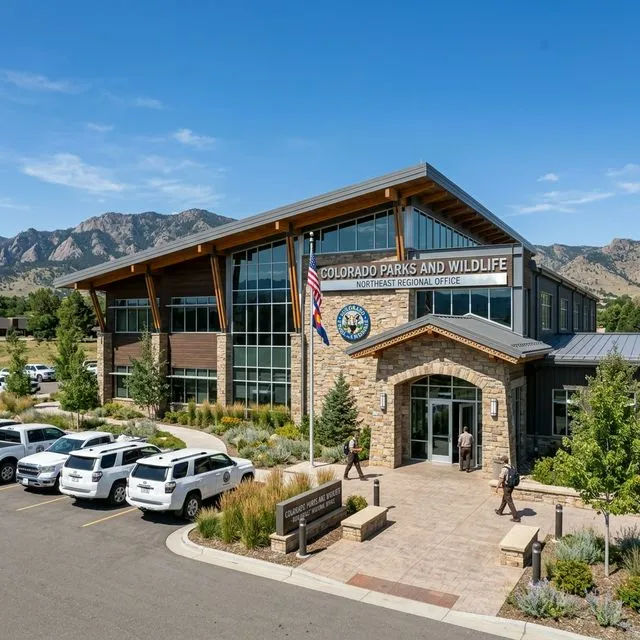
Colorado Does Not Title Boats — What That Means for You
If you are used to buying boats in states like Florida, Michigan, or Texas — where you receive a state-issued certificate of title just like a car — Colorado will feel unfamiliar. Colorado Parks and Wildlife (CPW) does not issue boat titles. There is no Colorado document that says "Certificate of Title" for any watercraft, regardless of its size, value, or propulsion type.
This does not mean that boat ownership in Colorado is unregulated. It means that ownership is established and documented through a different set of mechanisms: registration certificates, Bills of Sale, manufacturer documentation, and in certain cases, CPW physical inspections. Buyers and sellers must understand these alternatives to complete transactions smoothly.
Colorado does not issue boat titles, but CPW still needs acceptable ownership evidence before registration. If you are comparing nearby states, check each state's requirements separately because title rules and registration proof can differ from one jurisdiction to another.
This guide covers every method for proving boat ownership in Colorado, how to handle common scenarios (buying used, inheriting, moving from another state), and what to do when the seller has absolutely no documentation. For the complete registration process, see our Colorado Boat Registration Guide.
Five Ways to Prove Boat Ownership in Colorado
CPW accepts several types of documentation as proof of ownership when you apply for boat registration. Here is a comparison of all five methods:
Method 1: Bill of Sale (Most Common)
A Bill of Sale is the most common proof of ownership for private boat transactions in Colorado. While CPW does not prescribe a specific form, a valid Bill of Sale should include all of the following:
| Required Element | Details |
|---|---|
| Date of Sale | Full date (month, day, year) |
| Seller Information | Full legal name, address, phone number |
| Buyer Information | Full legal name, address, phone number |
| Purchase Price | Exact dollar amount (for use tax purposes) |
| Vessel Description | Make, model, year, length, hull material, color |
| Hull Identification Number (HIN) | 12-character alphanumeric code on transom |
| Engine Details | Make, type (outboard/inboard/sterndrive), horsepower, serial number |
| Signatures | Both buyer and seller must sign |
Notarization: CPW does not list notarization as the ordinary bill-of-sale requirement on its current registration page. A notarized document can still help when a transaction is disputed or when CPW asks for stronger ownership evidence.
Tip: Always request a copy of the seller's current or prior CPW registration certificate in addition to the Bill of Sale. It strengthens your ownership claim and makes the CPW application process faster.
Method 2: Prior Registration Certificate
A prior registration certificate can support ownership, especially when it names the applicant or connects cleanly to the seller through a bill of sale. This is common in two situations:
Boats previously registered in Colorado: If the seller has a current or prior CPW registration certificate, pair it with a signed bill of sale so CPW can connect the prior record to the new applicant.
Boats from title states: If the boat came from a title state, keep the out-of-state title or registration with the bill of sale. Colorado will not issue a Colorado title in return, but the out-of-state document can support the CPW registration application.
Do not rely on an old registration by itself if the seller name, HIN, or ownership chain is unclear. Treat it as supporting evidence and ask CPW what else it needs before paying.
Method 3: Manufacturer's Certificate of Origin (MCO/MSO)
When you buy a new boat from a licensed dealer, the manufacturer provides a Manufacturer's Certificate of Origin (MCO) or Manufacturer's Statement of Origin (MSO). This document is the boat equivalent of a car's factory origin document and establishes the first owner.
Dealers typically handle the CPW registration on your behalf, submitting the MCO/MSO along with the registration application. If you take possession of the MCO/MSO directly, keep it in a safe place — it is your primary proof of ownership and is difficult to replace if lost.
Method 4: Court-Issued Document
For boats acquired through legal proceedings, CPW accepts court orders as proof of ownership. Common scenarios include:
Estate / Probate: When a boat owner dies, the boat passes to heirs through the probate process. The executor or administrator of the estate provides a court order granting the vessel to the heir.
Divorce Settlement: A divorce decree that specifically awards the boat to one party serves as proof of ownership for CPW registration.
Lien Foreclosure / Court Judgment: If a boat is acquired through a mechanic's lien, storage lien, or other court judgment, the court order documenting the transfer serves as proof.
Abandoned Vessel: In rare cases, a court may issue an order granting ownership of an abandoned vessel. This requires the finder to follow Colorado's legal process for claiming abandoned property.
Method 5: CPW Physical Inspection (No Documents at All)
This is the path of last resort — used when you have no Bill of Sale, no prior registration, no MCO, and no court document. It is more common than you might think, especially with older boats that have changed hands informally multiple times over decades.
Here is how the process works:
1. Contact CPW: Call your nearest CPW office and explain that you need to register a boat but have no ownership documentation. They will schedule an appointment for a physical inspection.
2. Bring the boat to CPW: Transport the vessel to the CPW office on its trailer. The CPW agent will physically inspect the boat, verifying the Hull Identification Number (HIN), make, model, year, and other identifying details.
3. CPW reviews the HIN: The agent reviews the Hull Identification Number and vessel details. If the HIN is missing, altered, or inconsistent with paperwork, expect additional review before registration can move forward.
4. Provide any statement CPW requests: You may be asked to explain how you acquired the vessel, from whom, when, and for how much. Keep payment records, messages, photos, and witness information with your file.
5. CPW decides the registration path: If CPW accepts the ownership evidence, it can create or update the registration record. If not, you may need additional documents, a corrected bill of sale, legal paperwork, or another agency review step.
Timing and fees depend on the local CPW office and whether additional review is needed. Confirm the current process and any charges with CPW before you go.
Common Scenarios: What to Do
Here are the most common real-world situations Colorado boat buyers encounter, and the best approach for each:
| Scenario | Best Approach | Documents Needed |
|---|---|---|
| Buying new from a CO dealer | Dealer handles everything | MCO/MSO (dealer submits) |
| Buying used from a CO resident | Get Bill of Sale + prior registration | Bill of Sale + seller's CPW cert |
| Buying from someone in a title state | Get the title + Bill of Sale | Out-of-state title + Bill of Sale |
| Moving to CO from a title state | Use your existing title as proof | Your out-of-state title |
| Inherited a boat (CO resident) | Probate court order | Court order + death cert + prior reg |
| Received in divorce settlement | Divorce decree | Court decree + prior registration |
| Old boat, no paperwork at all | CPW physical inspection | Bring boat to CPW + notarized statement |
| Abandoned boat found on property | Legal abandoned property process | Court order + CPW inspection |
How This Compares to Title States
The no-title system has both advantages and drawbacks compared to states that require boat titles:
| Factor | Colorado (No Title) | Title States (e.g., FL, TX, MI) |
|---|---|---|
| Ownership proof | Registration plus acceptable proof such as bill of sale, prior registration, MCO/MSO, title, court document, or CPW inspection | State-issued certificate of title is often primary proof |
| Transfer process | New CPW registration application with proof of ownership | Title assignment plus state transfer paperwork |
| Title fee | No Colorado boat title fee | Varies by state and transaction |
| Lien questions | Ask for lender release and search available records when financing may exist | Liens may appear on the title record |
| Fraud check | Verify HIN, seller identity, registration history, and inspection needs | Title transfer review plus HIN/document checks |
The practical advantage of Colorado's system is fewer title-transfer steps for ordinary transactions. The tradeoff is that buyers need to preserve the ownership packet carefully because the registration certificate, bill of sale, prior title/registration, and supporting documents may be needed later. For a deeper comparison, see our guide on Boat Title vs. Registration.
Tips for Protecting Yourself as a Buyer
Because Colorado lacks the title system's built-in protections, buyers should take extra precautions:
1. Always get a detailed Bill of Sale signed by both parties. Even if the seller says it is not necessary. This document is your primary proof of ownership and your defense if the sale is ever disputed.
2. Verify the HIN matches the documentation. Check the Hull Identification Number on the transom (and on the starboard side of the hull where it meets the transom) against the number on the Bill of Sale and any prior registration. Mismatches should be a red flag.
3. Request a copy of the seller's CPW registration. Ask to see the seller's current or most recent CPW registration certificate. It confirms the boat was previously registered in their name.
4. Run a NICB stolen boat check. The National Insurance Crime Bureau offers a free VIN/HIN check that can reveal whether a vessel has been reported stolen or has an active insurance claim. While not foolproof, it is an important precaution.
5. Consider notarization for weak-document cases. It is not the ordinary CPW requirement for every bill of sale, but it can help authenticate a document if the ownership chain is thin.
6. Keep all documents permanently. In Colorado, your Bill of Sale and registration documents are your only proof of ownership. Store originals in a safe place and keep digital copies. You may need them years later if you sell the boat or move to a title state.
What About Financing and Liens?
Colorado's no-title system creates a gap in lien recording. In title states, lenders record their lien directly on the title document — the lienholder's name appears on the face of the title, and the owner cannot sell the boat without the lienholder's release.
In Colorado, there is no boat title document on which a standard state boat lien would appear. Lenders may use security agreements, UCC filings, or other documents depending on the loan and collateral package.
Before completing a high-value private purchase, ask the seller for a written lien release if any lender was involved, search available public records where practical, and consider checking the Colorado Secretary of State UCC database by seller name. A HIN search may not be enough by itself.
If a lien or security interest exists, get a lender release before closing. Without a release, you may be buying into a dispute even if CPW accepts the registration paperwork.
Moving to a Title State Later
If you later leave Colorado and move to a title state, you will need to obtain a title for your boat. The process varies by state, but generally you will need:
Your Colorado CPW registration certificate (current or most recent) as proof of prior registration.
Your Bill of Sale or original ownership documentation from when you acquired the vessel.
A completed title application in the new state.
Many title states will ask for Colorado registration plus proof of purchase before issuing a title. Some states may require a physical inspection of the vessel and HIN verification, similar to what CPW offers in Colorado. Plan ahead: if you know you may move, keep all original ownership documents in excellent condition.
Frequently Asked Questions
Does Colorado issue boat titles?
How do I prove I own a boat in Colorado?
Can I buy a boat in Colorado without a Bill of Sale?
What if I move to Colorado from a state that titles boats?
How do I check for liens on a Colorado boat before buying?
Is a notarized Bill of Sale required in Colorado?
Sources
- Colorado Parks and Wildlife — Boat Registration Application (https://cpw.state.co.us/buyapply/Pages/Boating.aspx)
- CPW — Boating Information (https://cpw.state.co.us/thingstodo/Pages/Boating.aspx)
- Colorado Secretary of State — UCC Search (https://www.sos.state.co.us/)
- National Insurance Crime Bureau — VINCheck (https://www.nicb.org/vincheck)
This information is provided for reference purposes only. While we strive to keep data accurate and up-to-date, registration requirements, fees, and regulations may change without notice. Always contact your state's official registration agency for the most current and authoritative information before making any decisions.