Quick Answer
In Florida, the first question is propulsion. Non-motorized kayaks, canoes, racing shells, and rowing sculls are generally exempt from registration. Florida's FAQ also says non-motor-powered canoes, kayaks, racing shells, and rowing sculls over 16 feet are titled, but not registered.
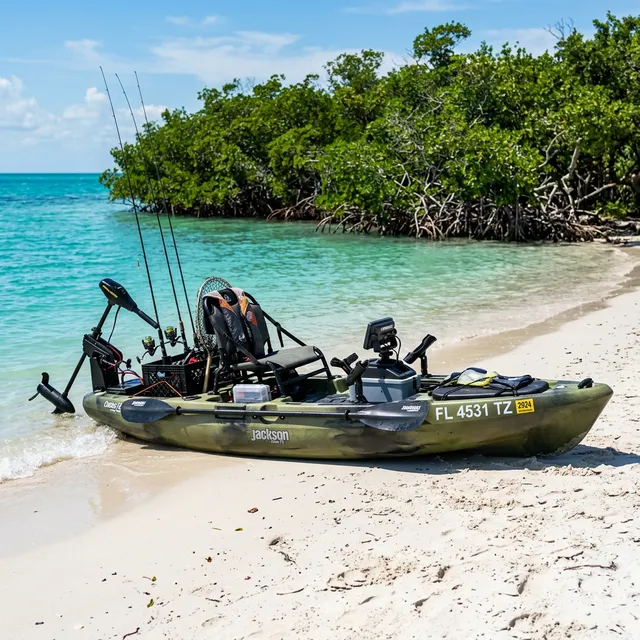
If you attach any motor - electric trolling motor, gas outboard, or electric jet drive - the kayak becomes a motorized vessel and must be titled and registered through your county tax collector or license plate agent.
Pedal-drive systems are human-powered, so they are treated differently from electric or gas motors. For the broader vessel rules, see our Florida Boat Registration guide.
What Florida Treats as Registration-Exempt
Florida does not require registration for the common human-powered craft people use on lakes, rivers, and coastal water:
| Vessel Type | Florida Treatment |
|---|---|
| Non-motor kayak | Generally exempt from registration |
| Non-motor canoe | Generally exempt from registration |
| Racing shell or rowing scull | Generally exempt from registration |
| Stand-up paddleboard | Generally exempt from registration |
| Non-motor canoe/kayak over 16 ft | Title required, but not registration |
That title rule matters because many long fitness and touring kayaks are over 16 feet. If you are buying one used, check the seller's title paperwork before you assume the boat is a simple registration exemption.
When a Kayak Becomes a Motorized Vessel
Any powered setup moves the kayak into Florida's motorized-vessel rules:
| Power Source | Florida Result |
|---|---|
| Electric trolling motor | Title and registration required |
| Gas outboard | Title and registration required |
| Electric jet drive | Title and registration required |
| Pedal drive | Human-powered; no registration |
There is no minimum horsepower or thrust threshold. If the vessel has a motor, it is treated as motorized for Florida registration purposes.
Safety Equipment You Still Need
Registration and title are only part of the story. Florida also expects kayaks and similar small craft to carry the right safety gear:
Wearable PFD: Carry one USCG-approved life jacket per person. For kayaks and SUPs, the practical rule is simple: bring it with you and wear it when the conditions call for it.
Whistle or sound signal: Required on board.
Navigation lights: Needed if you are on the water after dark or near dusk conditions.
Registration certificate: Required on board if the kayak is motorized and registered.
Boater safety card: Required for operators born on or after January 1, 1988, when they operate a motorized vessel of 10 horsepower or more.
Common Mistakes
1. Assuming all kayaks are treated the same: Florida separates human-powered craft from motorized craft. A trolling motor changes the answer immediately.
2. Ignoring the 16-foot title rule: A long non-motor kayak may still need a title even though it does not need registration.
3. Thinking a pedal drive is a motor: Pedal drives are human-powered, not electric or gas-powered.
4. Forgetting safety gear: Exempt from registration does not mean exempt from PFD and whistle rules.
Frequently Asked Questions
Do you need to register a kayak in Florida?
Does a kayak with a trolling motor need registration in Florida?
Do kayaks over 16 feet need a title in Florida?
Are pedal-drive kayaks treated as motorized in Florida?
What safety gear do I need on a kayak in Florida?
Sources
- FLHSMV - Vessel Titling and Registrations (https://www.flhsmv.gov/motor-vehicles-tags-titles/vessels/)
- FLHSMV - Vessel Frequently Asked Questions (https://www.flhsmv.gov/motor-vehicles-tags-titles/vessels/frequently-asked-questions/)
- FWC - Boating Regulations (https://myfwc.com/boating/regulations/)
- FWC - Boating Safety Equipment (https://myfwc.com/boating/safety-equipment/)
This information is provided for reference purposes only. While we strive to keep data accurate and up-to-date, registration requirements, fees, and regulations may change without notice. Always contact your state's official registration agency for the most current and authoritative information before making any decisions.