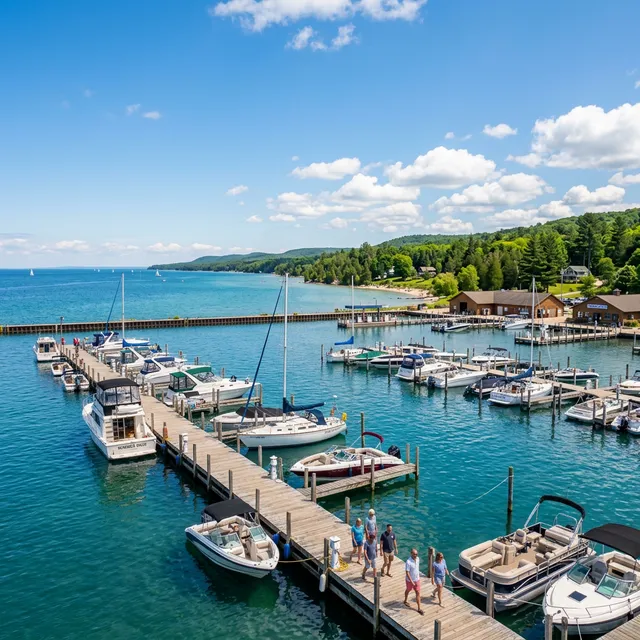
Who Needs a Boat Title in Michigan?
Not every boat in Michigan requires a title. Under Michigan law, a watercraft title is mandatory for two categories of vessels: any watercraft 20 feet or longer, and any watercraft with a permanently affixed engine (such as an inboard or sterndrive motor) regardless of length.
For boats under 20 feet with detachable outboard motors, titling is optional — but strongly recommended. A title provides legal proof of ownership and makes future resale significantly easier. Without a title, ownership disputes or difficulty registering in another state can arise.
Even if your boat does not require a title, you can voluntarily request one through any Michigan Secretary of State (SOS) office for just $5. This is a worthwhile investment for any boat owner who plans to sell or trade their vessel in the future.
Title Transfer Overview: How the Process Works
Transferring boat ownership in Michigan is handled by the Michigan Secretary of State (SOS), not the DNR. This is different from many other states where the fish and wildlife department manages watercraft titles. Here is an overview of the entire process:
The key parties involved are: the seller (who signs and assigns the title), the buyer (who applies for a new title), and the Secretary of State office (which processes the transfer and issues the new title). For a complete overview of Michigan's registration process, see our Michigan boat registration guide.
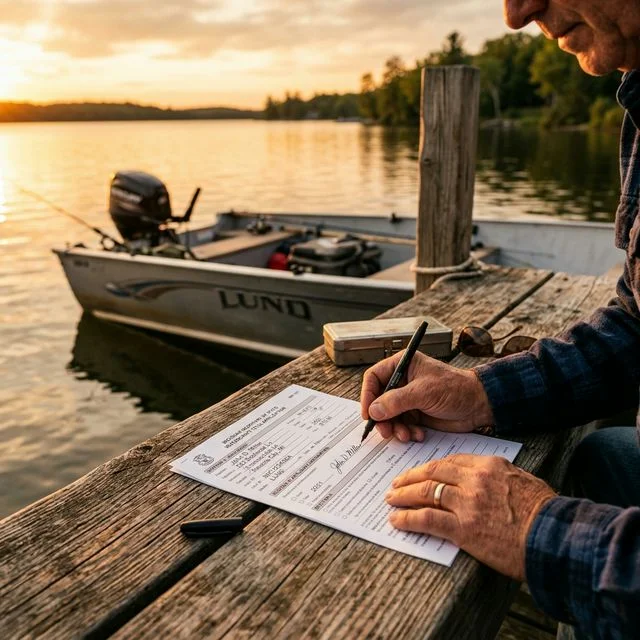
Step 1: Seller Assigns the Title
The seller must properly sign and assign the existing Michigan watercraft title to the buyer. The assignment section on the back of the title requires the seller's full legal name, signature, date of sale, sale price, and the buyer's full legal name and address.
If the boat is co-owned, all listed owners must sign the title. Make sure the seller fills out every field on the title assignment — incomplete assignments will be rejected at the SOS office. The odometer reading field (if present) applies to the engine hours for some larger vessels.
If the title has been lost, the seller should apply for a duplicate title before completing the sale. A duplicate title costs $5 and can be obtained at any SOS office with valid identification. Without a signed title, the buyer cannot complete the transfer.
Step 2: Complete Form WR-11L
The buyer must complete Form WR-11L (Application for Michigan Watercraft Title). This is the official application used for both new titles and title transfers. The form requires:
- Buyer's full name, address, and date of birth
- Hull Identification Number (HIN) — a 12-character alphanumeric code on the transom
- Vessel details: year, make, length, hull material, propulsion type
- Michigan registration (MC) number (if previously registered in MI)
- Purchase price and date of sale
- Seller's information
Form WR-11L is available at any Michigan Secretary of State office or can be downloaded from the Michigan SOS website. Both buyer and seller should review all information for accuracy before submission.
Step 3: Gather Required Documents
Before visiting the SOS office, assemble the following documents to avoid return trips:
| Document | Required? | Notes |
|---|---|---|
| Signed Title (from seller) | Yes | Must be properly assigned to buyer |
| Form WR-11L | Yes | Completed and signed by buyer |
| Bill of Sale | Yes | Must include HIN, price, both party's names/addresses |
| Valid Photo ID | Yes | Driver's license or state ID |
| Proof of Sales Tax Payment | Yes | 6% Michigan use tax (exemptions for family transfers) |
| Current Registration | If available | From seller; speeds processing |
| Surety Bond | If value > $2,500 | Required when no title is available and boat value exceeds $2,500 |
For boats valued over $2,500 where no title is available, a surety bond equal to 1.5 times the vessel's value is required. This protects against ownership claims. The bond can be released after a waiting period (typically 5 years) if no claims are filed.
Step 4: Visit a Secretary of State Office
Title transfers for watercraft must be completed in person at a Michigan Secretary of State branch office. This cannot be done online. Both the buyer and seller should go together when possible, though this is not strictly required if the title has already been properly signed and assigned.
It is strongly recommended to schedule an appointment through the Michigan SOS website or by calling 888-767-6424. Walk-in service is available but wait times can be significant, especially during boating season (May through September).
During the visit, the SOS clerk will verify all documents, process the title transfer, and either issue a new title on the spot (instant title for $10) or mail it to you within 4-6 weeks (standard mail for $5).
Title Transfer Fees
Michigan's title fees are among the most affordable in the nation. Here is a breakdown of all costs involved:
| Fee Type | Cost |
|---|---|
| Standard Title (mailed in 4-6 weeks) | $5.00 |
| Instant Title (same-day at office) | $10.00 |
| Duplicate Title | $5.00 |
| Lien Recording | Free |
| Use Tax (on purchase price) | 6% |
| 3-Year Registration (20 ft boat example) | $48.00 |
Compared to states like Florida (title fee up to $77.25) or Texas ($33 title fee plus $2 automation fee), Michigan's title costs are notably low. For more on how Michigan compares with other states, use our registration fee calculator.
Transferring an Out-of-State Boat to Michigan
If you are moving a boat from another state to Michigan, the process is slightly different. You will need to bring the following to a Secretary of State office:
- Previous state's title — signed and assigned by the seller
- Bill of sale — with full details of the transaction
- Current out-of-state registration
- Form WR-11L — completed for a new Michigan title
- Proof of Michigan use tax payment (6%) — credit is given for sales tax paid in another state
Michigan will issue a new Michigan title and MC registration number. If you paid sales tax in another state, Michigan provides a tax credit for the tax already paid, so you only pay the difference (if any). For example, if you bought a boat in Indiana (7% sales tax) and move it to Michigan (6%), no additional Michigan use tax is owed.
For details on neighboring states' requirements, see our guides for Indiana, Ohio, and Wisconsin boat registration.
Special Situations
Inherited boats: If you inherit a watercraft, you can transfer the title using a Certification from the Heir to a Vehicle form (if the estate is not probated) along with a death certificate and proof of your relationship. If the estate has been probated, a letter from the personal representative and court documents will suffice.
Boats without titles: If the boat has never been titled and falls below the mandatory titling threshold (under 20 feet with a detachable engine), the seller can transfer ownership by completing the back of the registration form. If no registration exists either, a comprehensive bill of sale is a last resort. For more complex situations, see our guide on registering used boats.
Dealership purchases: When buying from a licensed Michigan dealer, the dealership handles all title and registration paperwork. You will receive your new title and registration stickers by mail. The dealer collects sales tax at the time of purchase.
Common Mistakes to Avoid
Based on Michigan Secretary of State office data, these are the most common errors that delay title transfers:
- Incomplete title assignment — All fields on the back of the title must be completed, including full legal names and the exact purchase price
- Missing HIN verification — The Hull Identification Number must match across all documents; a single digit error will halt the process
- No bill of sale — Even when a title is available, a separate bill of sale is strongly recommended for tax and legal purposes
- Unpaid use tax — Michigan requires proof of 6% use tax payment; bring your receipt or be prepared to pay at the SOS office
- Expired appointment — SOS offices are busy during boating season; schedule online well in advance (May-August is peak)
Taking 15 minutes to double-check all documents before your SOS office visit can save you an entire return trip. Use our title vs. registration guide to understand which documents serve which purpose.
Michigan Title Transfer vs. Neighboring States
Michigan's title transfer process differs from its Great Lakes neighbors in several key ways:
| Feature | Michigan | Ohio | Wisconsin | Indiana |
|---|---|---|---|---|
| Issuing Agency | SOS | ODNR + BMV | DNR | BMV |
| Title Fee | $5 | $15 | $10.50 | $15 |
| Title Required For | 20 ft+ or fixed engine | 14 ft+ with motor | 16 ft+ | All motorized |
| Sales Tax | 6% | 5.75%+ | 5% | 7% |
| Annual Boat Tax | None | Varies by county | None | Yes (Excise Tax) |
Michigan's $5 title fee is the lowest among its Great Lakes neighbors, and the absence of annual property tax on boats is a significant cost advantage for long-term boat ownership. For a comprehensive cost comparison, visit our 50-state fee comparison page.
Frequently Asked Questions
How much does a boat title transfer cost in Michigan?
Do I need a title for every boat in Michigan?
What is Form WR-11L?
Can I transfer a boat title online in Michigan?
What happens if the seller lost the boat title?
Sources
- Michigan Secretary of State — Watercraft & Snowmobile Titling (https://www.michigan.gov/sos/vehicle/boat)
- Michigan Legislature — Natural Resources and Environmental Protection Act, Part 801 (https://www.legislature.mi.gov/)
- Michigan Department of Treasury — Sales and Use Tax (https://www.michigan.gov/treasury)
This information is provided for reference purposes only. While we strive to keep data accurate and up-to-date, registration requirements, fees, and regulations may change without notice. Always contact your state's official registration agency for the most current and authoritative information before making any decisions.