When You Need a Bonded Title in Texas
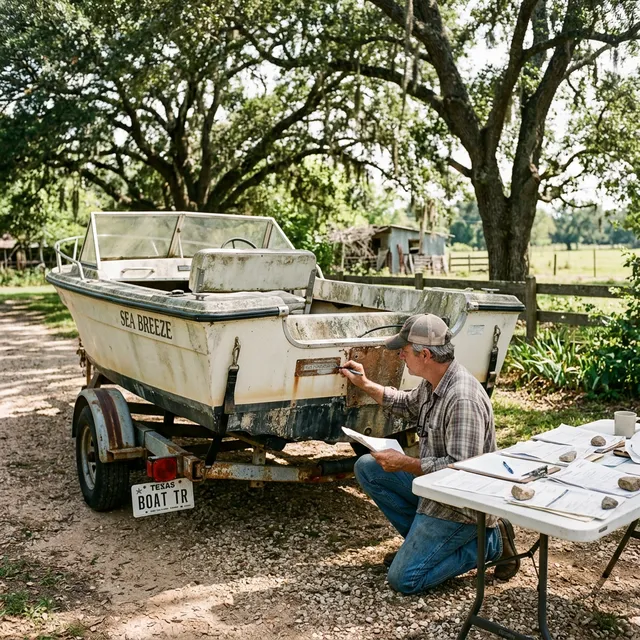
Buying a boat without a proper title happens more often than most people expect. You find a great deal on a bass boat from a neighbor, inherit a vessel from a family member, or purchase a fixer-upper from someone who lost the paperwork years ago. In each of these situations, Texas law provides a legal path to ownership through the bonded title process.
You will need a bonded title when: the original title has been lost, damaged, or destroyed and the previous owner cannot obtain a duplicate; the title was never properly transferred during a previous sale; you purchased the boat without receiving proper documentation; you inherited or received a gifted vessel without title documentation; or you have an abandoned boat with no clear chain of ownership.
The bonded title process is administered by the Texas Parks and Wildlife Department (TPWD) and involves posting a surety bond as financial protection. This guide walks through every step, form, and cost involved.
The Bonded Title Process: Step by Step
The Texas bonded title process involves seven distinct steps. Each must be completed in order before TPWD will issue a title:
Step 1: Gather Proof of Ownership
Before starting the formal process, collect every document that supports your claim to the boat. TPWD accepts various forms of proof, including: a bill of sale (even a handwritten one), a purchase invoice or receipt, a canceled check or bank statement showing the transaction, an insurance policy listing you as the owner, property tax records showing the vessel, or a storage or marina agreement in your name.
The more documentation you can provide, the stronger your case. Even if none of these documents alone constitutes a legal title, together they build a pattern of legitimate ownership that TPWD can evaluate.
Step 2: Request Ownership History (PWD 763)
If the boat was previously titled in Texas, request an Ownership/Lien Holder Printout using Form PWD 763. This document shows the last recorded owner and any liens against the vessel. TPWD can search their records using the Hull Identification Number (HIN) or the Texas registration number.
This step is important because it identifies who TPWD considers the legal owner. If the last recorded owner is different from the person who sold you the boat, you will need to document the chain of ownership more thoroughly.
Step 3: Contact Previous Owners (PWD 1347)
TPWD requires you to attempt contact with the last recorded owner and any lienholders. Use Form PWD 1347 (Request for Release of Ownership Interest) and send it via certified mail, return receipt requested. This creates a documented record that you attempted to reach the previous owner.
If the previous owner responds and signs a release of interest, it significantly simplifies your bonded title application. If they do not respond within a reasonable time (typically 30 days), the certified mail receipt showing the attempt is sufficient for TPWD to proceed.
Step 4: Submit PWD 388 (Statement of Fact)
Form PWD 388 (Statement of Fact for Boat and/or Outboard Motor Bonded Title Review) is the core application form. On this form, you explain in detail how you acquired the boat and why you cannot obtain the proper title or supporting documents.
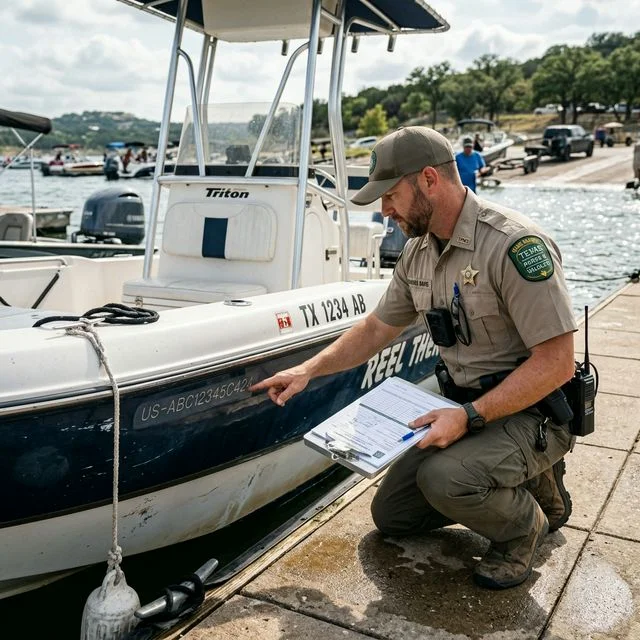
Along with PWD 388, submit Form PWD 504 (Verification of Serial Number) with a clear photograph of the Hull Identification Number (HIN) on the transom of the boat. Also include all supporting documentation gathered in Step 1 and the certified mail receipts from Step 3.
Submit this package to TPWD for review. Do not purchase a surety bond until TPWD approves your application — if your application is denied, a prematurely purchased bond cannot be refunded.
Step 5–6: TPWD Approval and Surety Bond
Once TPWD reviews and approves your PWD 388 application, they will notify you of the required surety bond amount. The bond must equal 1.5 times the assessed value of the vessel (or outboard motor). TPWD determines this value based on NADA marine guides and comparable sales data.
Here is how the bond amount translates to actual cost:
| Vessel Value | Bond Amount (1.5x) | Typical Bond Premium | Title Fee | Estimated Total Cost |
|---|---|---|---|---|
| $2,000 | $3,000 | $50 – $100 | $27.00 | $77 – $127 |
| $5,000 | $7,500 | $75 – $150 | $27.00 | $102 – $177 |
| $10,000 | $15,000 | $100 – $250 | $27.00 | $127 – $277 |
| $25,000 | $37,500 | $200 – $500 | $27.00 | $227 – $527 |
| $50,000 | $75,000 | $400 – $1,000 | $27.00 | $427 – $1,027 |
The bond premium (what you actually pay) is typically 1 to 3 percent of the bond amount, depending on your credit score and the surety company. Many surety bond companies specialize in bonded titles and offer online applications with instant approval. The bond does not require you to put up the full bond amount — only the premium.
The surety bond protects any third party who may come forward within the bond period to prove they are the rightful owner. If someone successfully proves ownership during the bond period, the surety company compensates them up to the bond amount.
Step 7: Final Submission and Title Issuance
With TPWD approval and your surety bond in hand, submit the following to TPWD:
The original surety bond certificate, completed Form PWD 143 (Vessel/Boat Application) in your name, Form PWD 504 with HIN verification, all applicable fees (title fee $27.00, registration fees, lien recording fee if applicable), and 6.25 percent sales tax on the declared purchase price.
After processing, TPWD mails you registration decals and an ID card. Approximately 21 days later, you receive your Texas Certificate of Title by mail. The title will contain a notation that it was issued under a bonded title, identifying the surety bond information.
The 3-Year Bond Period
The surety bond remains active for three years from the date of title issuance. During this period, anyone who believes they are the rightful owner can file a claim against the bond.
After the 3-year period expires without a claim, you can request TPWD to issue a clean title — one without the bonded title notation. This clean title is functionally identical to any other Texas boat title and carries no restrictions on future sales or transfers.
In practice, claims against bonded boat titles are extremely rare. Most situations where a previous owner would claim the boat are resolved during the PWD 1347 contact process (Step 3). However, the bond period exists as a legal safeguard and cannot be shortened or waived.
Boats vs. Outboard Motors: Separate Titles
Texas titles boats and outboard motors (25 HP or greater) separately. If you acquired a boat and an outboard motor without titles, you may need two separate bonded title applications — one for the vessel and one for the motor.
Each requires its own PWD 388 submission, its own surety bond (1.5 times the value of each item separately), and its own title fee. This can significantly increase the total cost of the bonded title process.
Outboard motors under 25 HP do not require a title in Texas, though they still need to be registered if they propel the vessel on public waters.
Required Forms Summary
| Form | Full Name | Purpose | When Needed |
|---|---|---|---|
| PWD 388 | Statement of Fact for Bonded Title Review | Core application — explain how you acquired the boat | Always |
| PWD 763 | Ownership/Lien Holder Printout Request | Check previous TX ownership records | If boat was previously titled in TX |
| PWD 1347 | Request for Release of Ownership Interest | Contact previous owner via certified mail | Always |
| PWD 504 | Verification of Serial Number | Verify HIN with photo evidence | Always |
| PWD 143 | Vessel/Boat Application | Apply for title + registration after bond approved | Final step |
All forms are available as free PDFs on the TPWD Boating Forms page. For a general overview of the title transfer process, see our Texas Boat Title Transfer Guide.
Common Pitfalls and Tips
Do not buy the bond before TPWD approval. If your application is denied (e.g., the boat is reported stolen, or there is an active lien), a prematurely purchased bond cannot be refunded. Wait for the official approval letter specifying the bond amount.
Use certified mail for PWD 1347. Regular mail does not create the documented proof of attempt that TPWD requires. Keep the certified mail receipts — you will need to submit them with your PWD 388 application.
Check for theft records. Before purchasing any boat without a title, ask the seller for the HIN and check it against the NICB VINCheck database to see if the vessel has been reported stolen. TPWD will deny a bonded title for stolen property.
Budget for sales tax. Even though the boat has no title, you still owe 6.25 percent sales tax on the purchase price. TPWD collects this as part of the final submission in Step 7.
Consider the total cost. For very low-value boats (under $1,000), the bonded title costs (surety bond premium $50–$100 + title fee $27 + registration + sales tax) may approach or exceed the boat's value. Factor this into your purchase decision.
Frequently Asked Questions
How much does a bonded title cost in Texas?
How long does the bonded title process take in Texas?
What is Form PWD 388?
How much is the surety bond for a boat title in Texas?
How long does the bonded title bond last in Texas?
Can I register a boat in Texas with just a bill of sale?
Sources
- Texas Parks and Wildlife Department — Bonded Title Process (https://tpwd.texas.gov/fishboat/boat/)
- TPWD Form PWD 388 — Statement of Fact for Bonded Title Review
- TPWD Form PWD 1347 — Request for Release of Ownership Interest
- Texas Transportation Code § 31.047 — Bonded Title for Vessels
- JetSurety — Texas Boat Bonded Title Surety Bonds (https://www.jetsurety.com/)
This information is provided for reference purposes only. While we strive to keep data accurate and up-to-date, registration requirements, fees, and regulations may change without notice. Always contact your state's official registration agency for the most current and authoritative information before making any decisions.