
Non-Resident Boating in Texas: The 90-Day Rule
Texas allows a non-resident vessel with current out-of-state registration to operate on Texas public waters for up to 90 consecutive days without Texas registration. After that, Texas registration requirements can apply.
The 90-day rule is a registration exemption, not a blanket waiver of Texas boating laws. The Texas Parks and Wildlife Department (TPWD) enforces boating regulations through its Game Wardens, and visiting boaters still need to follow Texas safety, education, PWC, and restricted-zone rules.
This guide covers everything non-residents need to know about boating in Texas: the exemption period, the temporary tax permit option, registration requirements for longer stays, and what to expect from Game Warden encounters on the water.
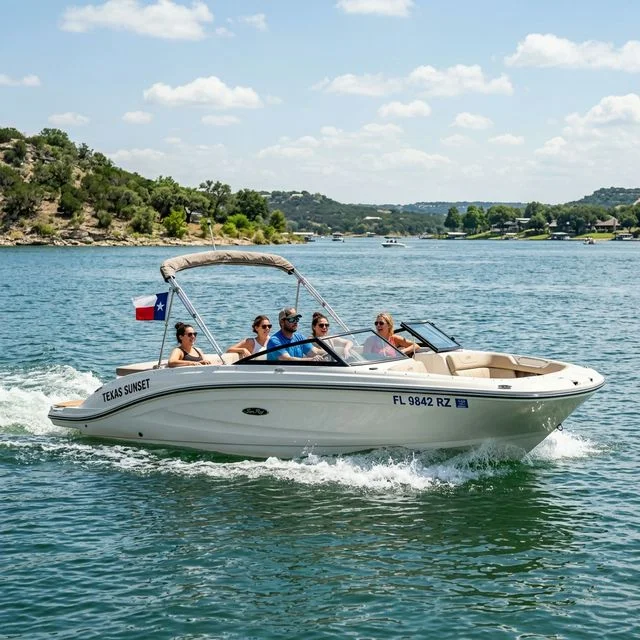
How the 90-Day Exemption Works
The exemption applies to a vessel that is currently registered in another state and is being operated in Texas by a non-resident. Here is the practical filing view:
Keep current registration proof on board. If a Game Warden checks the boat, you need to show that the out-of-state registration is valid.
Track consecutive Texas use. TPWD describes the non-resident allowance as 90 consecutive days. If your stay is seasonal, extended, or repeated, confirm with TPWD before assuming the exemption still covers the vessel.
Separate storage, road use, and water use. The boat registration rule is not the same as trailer title/registration or local storage rules. If the boat and trailer will remain in Texas for an extended period, check both TPWD and county/TxDMV requirements.
Register before the exemption runs out. If the vessel will remain in Texas public-water use beyond the exemption, start the TPWD title/registration process early instead of waiting for a citation.
The Boat Trailer Trap: A Regulatory Blind Spot
One of the easiest mistakes for visiting boaters is treating the boat and trailer as one item. Texas separates them.
TPWD handles the boat and outboard motor. Boat trailers are handled through county tax assessor-collector offices and the Texas vehicle-title system.
If the trailer will be used on Texas roads for an extended stay, confirm the trailer title, registration, and permit requirements separately. Do not assume the boat's TPWD registration exemption automatically covers the trailer.
The 90-Day Timeline: Key Decision Points
| Timing | What to Do | Why It Matters |
|---|---|---|
| Before launch | Confirm home-state registration is current and carry the certificate | Texas recognition depends on valid out-of-state registration |
| During the visit | Track consecutive Texas use and follow Texas safety/PWC rules | The exemption does not waive operating laws |
| If the stay may exceed 90 days | Contact TPWD before the exemption ends | You may need Texas title/registration and tax handling |
| If claiming a tax exemption | Check whether PWD 1434 applies | The temporary tax permit is limited and document-driven |
Temporary Tax Permit (PWD 1434)
Form PWD 1434 is a temporary tax permit for a taxable vessel or outboard motor owner who qualifies for a specific tax exemption. It is not a general extension of the non-resident registration exemption.
Here are the key details of the temporary tax permit:
| Feature | Details |
|---|---|
| Cost | $150 per permit |
| Duration | Up to 90 days from issuance |
| Renewability | Non-renewable, but a second permit can be issued |
| Max per Year | 2 permits per vessel per calendar year |
| Gap Requirement | Minimum 30-day gap after first permit expires before second can be issued |
| Transferable | No — tied to specific vessel and owner |
| Refundable | No — non-refundable once issued |
The PWD 1434 permit is tied to tax treatment: by the time the permit expires, the boat or motor generally must be removed from Texas or the tax issue must be handled under TPWD rules. It does not replace the registration requirement for operating on Texas public waters.
Filing note: Follow the current TPWD form instructions for signatures, submission location, and supporting documents. Do not assume the permit is available online or available for every non-resident boat.
To apply or find a location, you can contact TPWD at 512-389-4800 or visit a TPWD Law Enforcement field office.
Moving to Texas: New Resident Requirements
If you are a new Texas resident (not just visiting), different rules apply. New residents who bring a boat that was previously titled or registered in another state must:
Register the boat in Texas within 90 days of becoming a Texas resident if the vessel will be operated on Texas public waters.
Pay the New Resident Tax if eligible. Texas lists a special $15 New Resident Tax for qualifying boats or outboard motors brought in by a new resident. Confirm eligibility and deadline rules with TPWD before assuming ordinary use tax does not apply.
Transfer the title to Texas using Form PWD 143. You will need your out-of-state title, a completed application, and payment of all fees and taxes. See our Texas Boat Title Transfer Guide for the complete process.
TPWD Game Warden Enforcement
Texas Parks and Wildlife Department Game Wardens are commissioned law enforcement officers with full authority to enforce boating laws on all Texas waters. Understanding what to expect during a Game Warden encounter helps ensure a smooth experience.
Routine safety inspections are common, especially on busy weekends at major lakes. Game Wardens will typically approach your vessel and request to see your registration certificate, check safety equipment (life jackets, fire extinguisher, navigation lights), and verify that the operator meets education requirements.
What Game Wardens check for non-resident boats: valid out-of-state registration displayed on the hull, registration certificate on board, proof the vessel has been in Texas for fewer than 90 days (if questioned), and compliance with all Texas boating safety requirements.
Operating with expired home-state registration can defeat the non-resident exemption. Keep current registration proof and trip records available, especially for seasonal or extended visits.
Texas Boating Rules That Apply to Non-Residents
While your home-state registration is valid in Texas for up to 90 days, you must still comply with all Texas boating laws while on Texas waters:
Boater education: If you were born on or after September 1, 1993, and operate a vessel with 15+ HP or any personal watercraft, you must have completed a NASBLA-approved boater education course. Most states' boater education cards are recognized in Texas through NASBLA reciprocity.
Safety equipment: Texas equipment rules depend on vessel type, length, propulsion, and operating conditions. Common inspection items include wearable PFDs, throwable flotation where required, fire extinguisher where required, sound-producing device, navigation lights, and PWC-specific equipment.
BUI laws: Texas enforces a .08 BAC limit for Boating Under the Influence, applicable to all operators regardless of residency. Current penalties should be checked against Texas law before relying on a fixed amount.
Speed and wake zones: No-wake zones, idle-speed zones, and other restricted areas are marked and enforced. Penalties for violations apply equally to residents and non-residents.
What Happens If You Exceed 90 Days
If your vessel remains in Texas public-water use beyond 90 consecutive days without Texas registration, do not keep operating under the visitor exemption. Two issues need review:
Registration obligation: You must register the vessel in Texas through TPWD using Form PWD 143. Registration fees range from $32 to $150 depending on vessel length, for a 2-year period. This requirement applies regardless of whether you maintain valid registration in your home state.
Tax obligation: Texas use tax, new resident tax, or a limited temporary tax permit may apply depending on why the boat is in Texas and who owns it. Use TPWD Form PWD 930 or TPWD instructions instead of assuming the 90-day registration exemption controls the tax deadline.
Continuing to operate an unregistered vessel on Texas waters after the exemption can lead to citations and delayed title/tax processing. Contact TPWD before the 90-day mark if your stay is becoming long-term.
Use our registration calculator to estimate the total cost of Texas registration and factor it into your plans.
Frequently Asked Questions
How long can a non-resident boat in Texas without registering?
What is the Texas temporary boat permit (PWD 1434)?
Do Texas Game Wardens check non-resident boat registration?
Do I need a Texas boater education card as a non-resident?
What happens if I exceed the 90-day limit in Texas?
Sources
- Texas Parks and Wildlife Department — Boat Registration for Out-of-State Vessels (https://tpwd.texas.gov/fishboat/boat/)
- TPWD Form PWD 1434 — Temporary Tax Permit
- Texas Water Safety Act — Chapter 31, Texas Parks and Wildlife Code
- NASBLA — Reciprocity of Boater Education (https://www.nasbla.org/)
- TPWD Game Warden Division — Field Office Locations (https://tpwd.texas.gov/warden/)
This information is provided for reference purposes only. While we strive to keep data accurate and up-to-date, registration requirements, fees, and regulations may change without notice. Always contact your state's official registration agency for the most current and authoritative information before making any decisions.