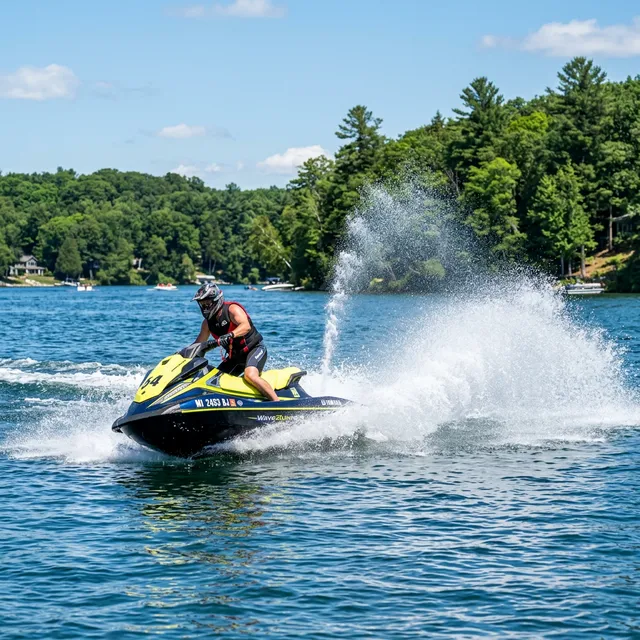
Michigan PWC Rules at a Glance
Michigan treats personal watercraft, including Jet Skis, WaveRunners, and Sea-Doos, as motorized watercraft with extra safety rules. Start with four checks: age, boater safety certificate, registration/title paperwork, and required safety equipment.
- Under 14: cannot operate a PWC.
- Age 14-15: may operate only with a boating safety certificate and qualifying parent, guardian, or designated adult supervision.
- Age 16+ born after Dec. 31, 1978: may operate with a boating safety certificate.
- Born on or before Dec. 31, 1978: Michigan DNR lists no PWC certificate restriction.
- Operating hours: PWC operation is restricted from sunset until 8 a.m.
For standard boat paperwork, see our Michigan boat registration guide.
Age and Boater Safety Certificate Rules
Michigan DNR separates PWC operators from regular motorboat operators. The PWC birthdate cutoff is December 31, 1978, which means many adult PWC riders still need a boating safety certificate.
| Operator | Michigan PWC rule |
|---|---|
| Under 14 | Not allowed to operate a PWC. |
| Age 14-15 | Certificate required, plus parent, guardian, or designated adult supervision as DNR describes. |
| Age 16+ born after Dec. 31, 1978 | May operate with a boating safety certificate. |
| Born on or before Dec. 31, 1978 | Michigan DNR lists no certificate restriction for PWC operation. |
The standard non-PWC motorboat cutoff is different: operators born on or after July 1, 1996 need a boating safety certificate for a motorboat over 6 horsepower, and DNR lists additional horsepower and supervision limits for operators under 12. Do not use the regular motorboat cutoff for PWC.
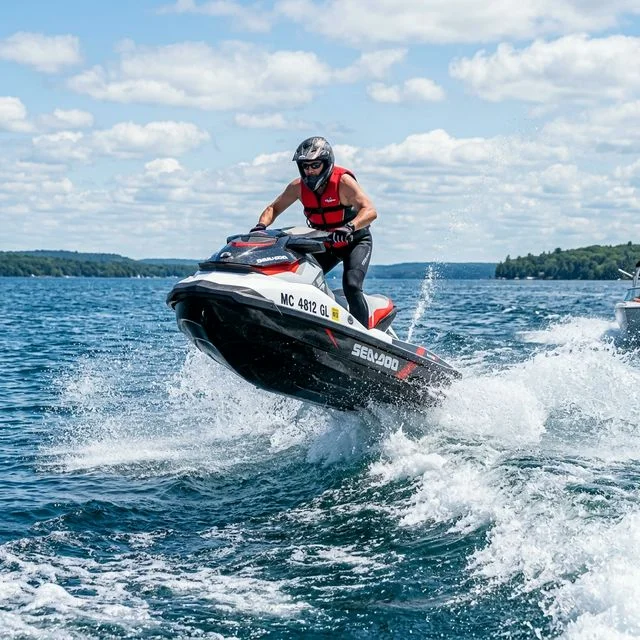
Registration and Title Requirements for Jet Skis
A PWC is motorized, so plan on Michigan watercraft registration unless the PWC is only temporarily visiting under a valid out-of-state registration. Michigan registrations are issued for three years and expire March 31 of the third year.
Michigan requires a watercraft title when the vessel is 20 feet or longer or has a permanently affixed engine. Many PWCs have built-in propulsion systems, but the safe approach is to confirm title status with the Secretary of State before a private sale.
Michigan lists a $5 watercraft title fee, 6% sales or use tax unless already paid or exempt, and registration fees based on length or vessel class. For title paperwork, use our Michigan title transfer guide.
Life Jacket, Lanyard and Safety Gear
Michigan DNR says each person riding on a PWC, or being towed behind a PWC or other vessel, must wear a USCG-approved Type I, II, or III personal flotation device. Inflatable PFDs are not allowed on PWC or while being towed.
The engine cut-off lanyard is also a practical compliance check: attach it to the operator, clothing, or PFD and to the ignition switch while operating. Add the normal vessel safety gear required for your waterway, including sound-producing device, fire extinguisher when applicable, navigation lights when required, and visual distress signals on Great Lakes waters.
Operating Hours and No-Wake Situations
Michigan PWC operation is restricted during the period that begins at sunset and ends at 8 a.m. Because sunset changes through the season, check the local sunset time before late-day rides.
Slow/no-wake operation matters near other vessels, docks, swimmers, shorelines, and shallow water. Local lake rules and marked no-wake zones may be stricter than statewide rules, so read posted signage before riding.
Towing with a PWC
If towing a tuber, skier, or wakeboarder behind a PWC, make sure the machine is rated for the operator, an observer, and the person being towed. A two-person PWC usually does not leave room for a legal observer and returning passenger.
Everyone on the PWC and the person being towed should wear a USCG-approved non-inflatable Type I, II, or III PFD. Apply the same sunset-to-8 a.m. PWC operating restriction to towing plans.
Common Compliance Mistakes
The most common mistakes are easy to avoid: letting a child under 14 operate, using the wrong birthdate cutoff, riding after sunset, wearing an inflatable PFD on a PWC, forgetting the lanyard, or assuming a rental operator handled every legal requirement for you.
For visitors, combine this guide with our Michigan non-resident boating guide so registration and safety-certificate questions are handled before launch day.
Frequently Asked Questions
What is the minimum age to operate a jet ski in Michigan?
Do adults need a boating safety certificate for a PWC in Michigan?
Can I ride a jet ski after sunset in Michigan?
Are inflatable life jackets allowed on Michigan jet skis?
Does a Michigan jet ski need registration?
Sources
- Michigan DNR — Boat operator age restrictions (https://www.michigan.gov/dnr/things-to-do/boating/rules-and-regs/age-restrictions)
- Michigan DNR — Life jacket rules (https://www.michigan.gov/dnr/things-to-do/boating/rules-and-regs/life-jacket-rules)
- Michigan Secretary of State — Recreational vehicles and watercraft (https://www.michigan.gov/sos/vehicle/recreational-vehicles-watercraft)
- Michigan Courts — Personal Watercraft Offense Types (https://www.courts.michigan.gov/)
This information is provided for reference purposes only. While we strive to keep data accurate and up-to-date, registration requirements, fees, and regulations may change without notice. Always contact your state's official registration agency for the most current and authoritative information before making any decisions.